Posts mit dem Label Culture werden angezeigt. Alle Posts anzeigen

Dienstag, 17. April 2012

Indigenous people of the Arctic

The Arctic region encompass eight nation states: Canada, Finland, Greenland (Denmark), Iceland, Norway, Russia, Sweden, and the United States. The geography and climate condition of the region can be described as foreboding, invoking an imagery of a cold and bitter landscape. Yet, people not only inhabit in this area, they thrive – contributing to a rich culture built on the relative isolation of the cold climate.
Late 9th century photo of Saami villagers 

The Saami people are traditionally nomadic herders who lived in the northern reaches of Scandinavia. Having been traditionally isolated from the affairs of the rest of Europe, major attempts to include assimilate them occurred in the 17th century – comparatively late in regards to other European groups. Historically, Saami lands contained scattered ritual objects and sacrificial sites symbolizing a connection between the people and the landscape. Most of these sites fell into obscurity upon efforts to convert the Saami people into Lutheranism. Even so, the symbolism of these sites isn’t completely.
Photo of Nivkh men 

The Nivkhs lives in the far east of Russia. They speak a paleosiberian language – a group of languages not related to each other than being influenced by Tungusic and Turkic languages. It is theorized that they have been influential in the peopling of Manchuria, Korea and Japan as evidence of their cultural settlements have been found in those region. It is quite possible they had extensive interactions with the Ainu, another isolate group from Japan, though much of the data for that is lost. Like the Saami they are semi-nomadic, having settlements for winter and summer.
Aleut dancers

Aleuts are a significant group archaeologically, because they provide the model to how the peopling of the Americas occurred. The Aleuts are indigenous to Russia and Alaska share the same language family as the Inuit of the Americas and the Yupik that inhabits similar territories. Along with increased archaeological data, it helps supports the theory that the first people who arrived in the America did so from Asia during the last ice age. One interesting aspect of the cultures of these groups is that gender roles were permeable. Depending on conditions, it is not uncommon for the people to switch gender roles to favor their survival.
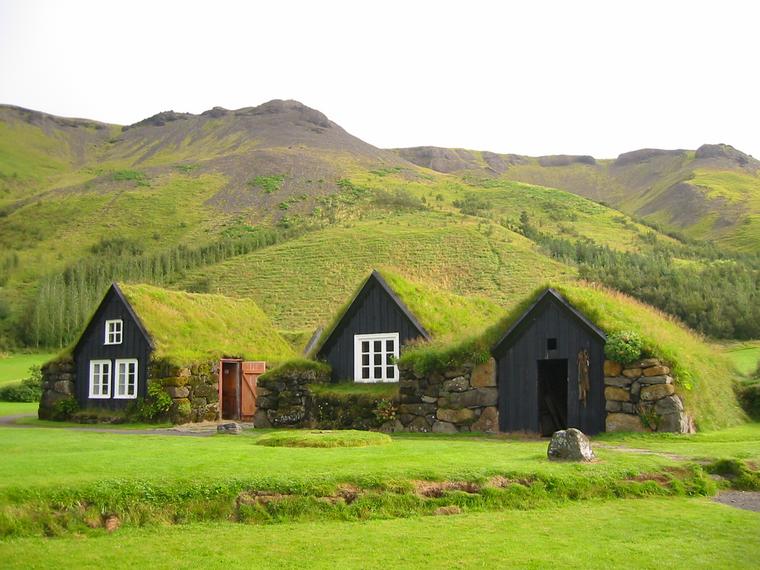
Turf houses in Iceland 

Icelanders are the indigenous people of Iceland and its main ethnic group. They are a Germanic people who speak the Nordic branch of the Germanic language. Due to their relative isolation from other Germanic groups, Icelandic reverted some of its Germanic sounds back to its Indo-European roots. Iceland provides us with the most complete source of Nordic Mythology written by Christian monks after the conversion of the islander. Despite conversion, there are still strong aspects of Norse belief in Iceland. It is estimated that half of all Icelanders still consider that elves might exists, for examples. Being short on biodiversity did not stop Icelander from expanding into agriculture and fishing. Indeed all but one mammal in Iceland were introduced by humans for agricultural purposes.

Donnerstag, 5. April 2012

Party tips that we all should know

It’s either the end or the beginning of spring break (methinks schools conspire with each other to have spring break on different weeks so that there isn’t a massive influx of young people.) It’s also probably the last quarter for many students. So naturally, Spring is the time to live it up and party. There is nothing wrong with going to a good old kick back with beer pong (unless it’s the fifth one you’ve been to that week and you haven’t been to class) but there are still responsibilities one must take to ensure we create a rape free zone.

1. Be aware of people’s body gestures and speech: One of the easiest ways to see if a person is interested in being around is to pay attention to their body language. If they seem distant, they avoid eye contact, use protective actions (like crossing arms or step back a little), if they respond with short indifferent answers, then its best to move on. Find other people to talk to and perhaps they will be more receptive of you. If you see someone who is uncomfortable by your friend's presence, pull your friend away and take them somewhere else.
2. Don’t be insistent: There is that one guy who is a total jerk ass who doesn’t respect people’s boundary and insist they do what he wants and destroys the party. Don’t be that guy.
3. Respect boundaries: Know what people want. If they are strangers to you, don’t go slapping their asses, giving them huge bear hugs or go “Man that’s one nice piece of ass”. Greet them with a handshake, share a few words and see if you click. You really should only do those things to people that you know will accept it. Don’t assume everyone will see your approaches the same way you do.
4. Don’t take advantage of a drunken person: Don’t try to have sex with a person who is too drunk to say yes or know what they’re doing. Just don’t. Use the golden rule here. If you are not sure if someone is capable of saying yes or capable of self-awareness, err with the side of caution. Assume they are not. If you see someone talking a drunken stranger with them, stop them or go with them. Even if all they were doing was making sure that person has a safe place to sleep, you’ll have the satisfaction of know that you help contribute to that safety. If you noticed that both parties are too drunk, just stop them. It is better that they both know and consent to sex than it is to have total confusion in the morning.
5. Consent can be retracted: Yes isn’t yes forever and no one is obligated to have sex. If a person wants to stop half way, then stop. And frankly it’s better if both parties are enthusiastic about it the whole way through.
6. Have fun, but be nice: Go out and have a drink, share laughs, own people at pong, light a joint, puke on the yard, forget that you had an important meeting in the morning. Do all that but don’t be a jerkass to others. Parties should be fun for everyone not just one person. And trust me; you’re not making the party fun by disrespecting people’s personal boundaries or violating them. If a person is not interested in you than just go somewhere else and enjoy your time. And don’t take it personally either. They don’t know you and they don’t know you’re intents. It’s not about you, and you should respect that.

Sonntag, 30. Januar 2011

Transphobia and video games


In general, our society is still very transphobic. There's elements of it that lingers in the LGBT community, because all to often people don't want to remember the T part. Video games are no different. More often then not, it reflects the gender normativity of our society that often portrays androgynous or abigious people negatively. I can't claim to know much about the transgendered experience, but I try my best to understand their posistion. (And don't get me wrong. I love the RE series yo. But I can love them and critique them at the same time.)


In Resident Evil Code: Veronica and Resident Evil Dead Aim, transgendered people are portrayed as in the stereotype of being obsessive (which is why they changed their gender), vain, and untrustworthy. Alfred for RE CV is the obsessive part. He's crazy and obsessed with becoming what he's not (his sister). The idea that transgendered people are what they are "not" has been used to justify the vilification of them. Morpheus is also an obsessive who transform into a female like creature in order to obtain beauty, which is another stereotype of transgendered people (that they are always trying to be beautiful). Sometimes, transgender chose to change their sex because they are trying to become what they truly believe they should be. They're not doing it to become what they are not, because to them they are that way.

Donnerstag, 30. Dezember 2010

But why should we?

Joe. My. God has posted on the subject of gay culture fading away to a more heteronormative view of the world. As noted by the author of the quote, some LGBT people sees this as a fair trade-off. I say "oh fuck no!"

I understand where people would say that the assimilation of LGBT culture into the mainstream culture is a good thing. We have been fighting for our rights to be viewed as normal people and normal citizens. We want to show people that we are harmless and productive members of society. Most of us are!

But that doesn't mean we should lose our culture. The very thought makes me think of all the forced assimilation that Native Americans went through. Or the Aborigines. Or Asian Americans. Native Americans were force into a European imposed hegemony. They lost traditional culture. Where one culture was more egalitarian in their treatment of sexes and gender, the hegemony made sure they reflected their ideals about sex and gender. This is what worries me about the assimilation of LGBT culture into the mainstream; The will lose something that could be valuable later on. Furthermore, it implies a superiority of one culture and one group over another. Asian Americans were seen as "model minorities" because they assimilated faster and fitted into the the Western ideals of how proper people should act. If LGBT culture were to do the same, it would be like admitting that the fundies are culture is better. As I've put in my Southeast Asian culture class, we are internalizing the colonialism, making the struggle for autonomy all for naught.

Mind you that I'm not cultural relativist. Practice that are detrimental to society as a whole should be done away with ("honor" killings, burning witches, headhunting, institutionalized sexism, and things like that.) Still, I don't see how being a diva or dressing in fabulous colours make you a determent to society. In the end I think we should not seek to erase LGBT culture for a normative view. Instead it should be a piece of the picture like a part of a grand mosaic. So be productive, be normal, but be a flaming diva if you want to be too.

Samstag, 11. Dezember 2010

Ethnography


Here is a modern Apache person. The reason I chose this photo is because I want to question our perception of indigenous people. In our society, we tend to look at indigenous people as archaic and outside of time. This is false. Indigenous people are, in fact, contemporay people.

Here is another indigenous group, the Ainu:

Donnerstag, 9. Dezember 2010

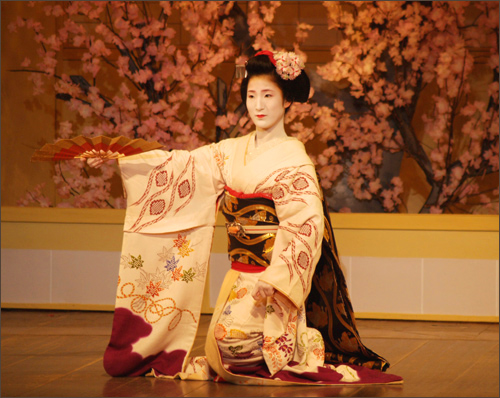
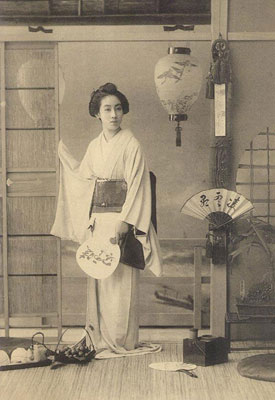
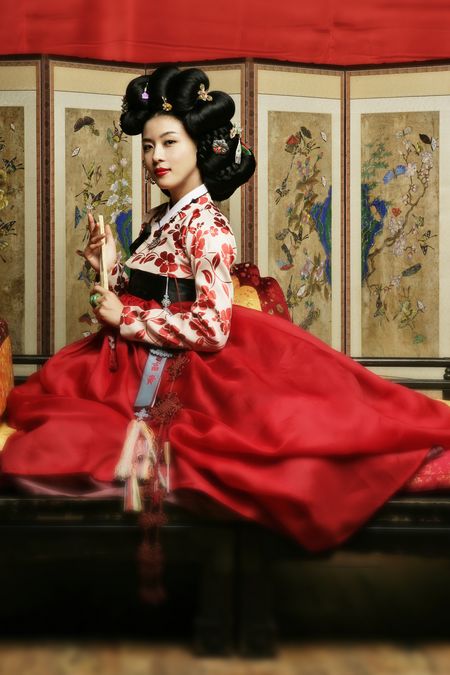
Gisaeng and Geisha: Then and now


Notice that modern portayals of Geisha and Gisaeng tends to emmulate western notions of orientalism and the hyper-feminization of Asian women.

Montag, 11. Oktober 2010

Balloons


I've been playing Pokémon Platinum. One of the pokémon is a ghost creature called Drifloon. It's supposed to be a balloon animal of some sort.


Balloons were originally made to be instruments of science, where one could research weather patterns. It's still used to some extant but it's being phased out due to more efficient methods. Balloons have since been used for transportation, decoration, entertainment and even medicine. There are now even balloon art, which is a form of non-permanent sculpture.


Balloons are made out of a number of materials ranging from rubber to polycholorprene. Balloons are popular with children, and is ubiquitous with celebrations. They do, however, pose many problems. Airborne balloons can easily become pollutants as the material they are made off are not easily degradable. They pose a danger to wildlife. For children, balloons are suitable only for a certain age range due to choking hazards.


Montag, 4. Oktober 2010

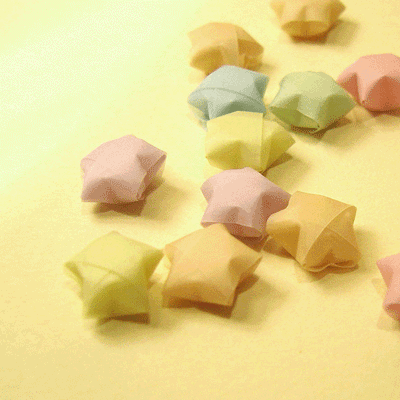
Stars


You know, people make these look so easy. After all, it's just one strip of paper being folded repeatedly and then crushed in the end.
Whenever I make them, 2 out of 5 end up perfect looking while the rest look like a wad paper ball.
I thought about it, and these objects wouldn't survive the archaeological records. At least not here, where there is enough moisture to destroy them. If we were a culture without writing, our knowledge of how to make origami would have to be transmitted orally, and it would join the ranks of the so-called "folk art". (It's a loaded term because of the association of class.)
Now living in a technologically advance society, we can easily access information on how to make these little stars.
I use these as sentimental gifts. It's perfect for little decorative things. Of course, some times the paper can be expensive.

Donnerstag, 9. September 2010

Es is nur ein Kuss


Mark Dean Brown und Björn Czepan hatten eine Aufregung gemacht. Wie? Sie küssen und es war in eine Zeitung. Leute soll entsetzt nicht sein. Es is nur ein Kuss.

Montag, 6. September 2010

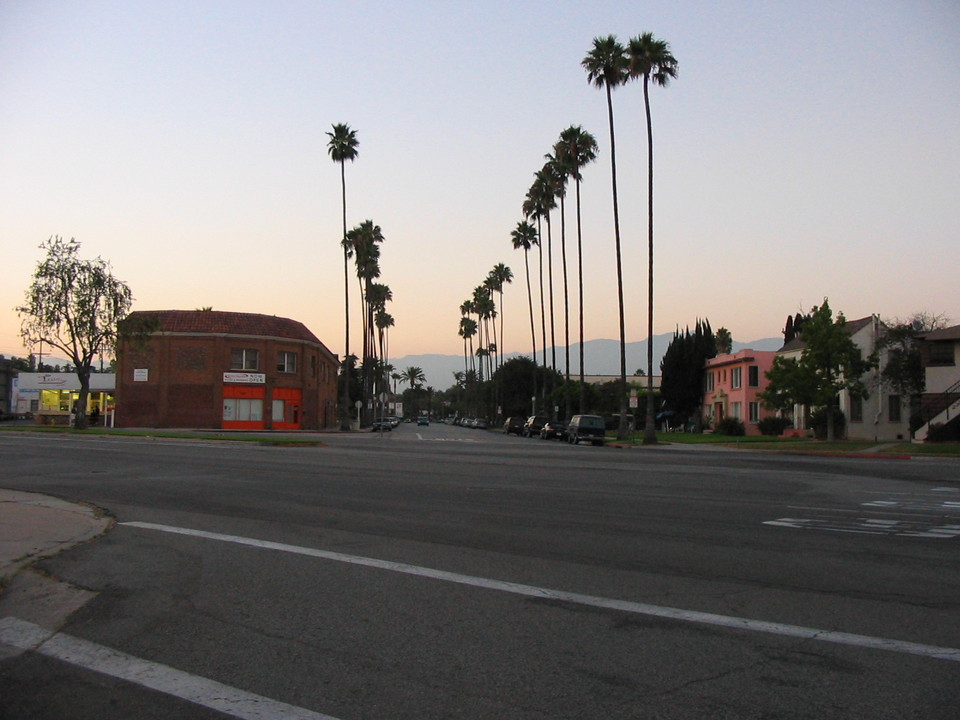
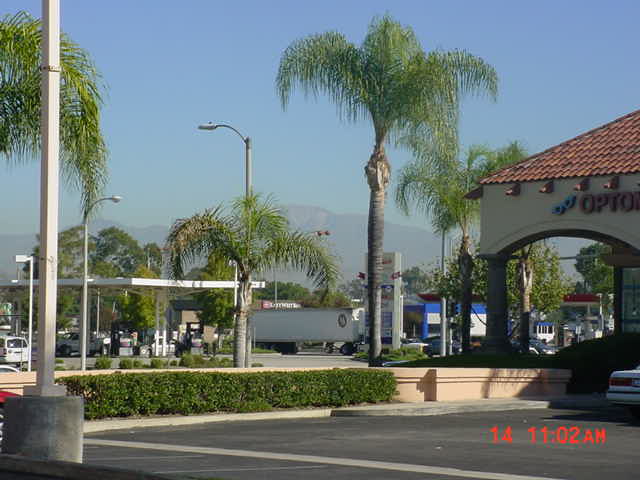
Cities I've Visted Pt.1


I use to go to Diamond Bar every so often for Chinese food. I've since found other places to supplement that.


Many of my friends live in Alhambra, so it would have been very hard not to have been there once.


My friends and I would often meet in Rowland Hights to eat Dim Sum and seafood.


I go to West Hollywood ever year as a participant of the AIDS walk. Next year, I plan to attend Pride there.


Well, I technically can't visit Riverside since I live in Riverside. There are, however, many great places in Riverside.


For later:
Upland, CA
San Bernardino, CA
Colton, CA
Dana Point, CA
San Bernardino National Forest, CA
Victorville, CA
Beaumont, CA
West Covina, CA
Baldwin Park, CA
Los Angeles, CA
San Diego, CA
Long Beach, CA
Newport, CA
Huntington Beach, CA
Santa Anna, CA
Anaheim, CA
Fullerton, CA
Chino, CA
Westminster, CA
Carona, CA
Norco, CA
Taipei, Taiwan
Phnom Phen, Cambodia
Battambong, Cambodia
Siem Riep, Cambodia
Sihanokville, Cambodia
Kampong Chan, Cambodia
Kampong Cham, Cambodia
Las Vegas, NV

Donnerstag, 26. August 2010

Ethnography

This editions of Ethnography, I'm going to focus on the negotiation of group identity.


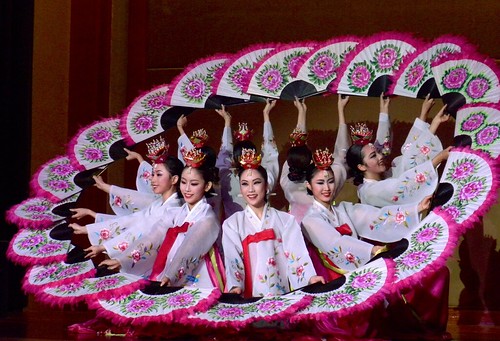
First let's start off with a Korean dance called Buchaechum (부채춤). Buchaechum has become very synonymous with various Korean celebrations ranging from Buddha's birthday to simple Church days. Buchaechum is a kinda of iconic of Korean culture (esepecially in it's design, make-up, and hanbok), so it is use to represent Korea in a universal way.


Next is Jeruselam Pride. Pride has always been been representing the LGBT culture in the most fabulous fasion possible through the body of the participants, the colors, and the music. But for Jeruselam's Pride, there is an added emphasis on the role of the secular Jewish community in promoting LGBT people as part of their own identity.


Food is always a way to declare one's ethnic identity, and therefore ethnic enclaves will have their food stuff served and readily availiable. Here is a sample of some of the food one can find in Little Phnom Penh in Long Beach, California. Long Beach is one of the biggest Khmer-American community.


The Cahuilla, like many other Native American tribes, seek to find a lost identity by riviving old arts and costoms.

Dienstag, 17. August 2010

They're Still There

Ever noticed, when going to a museum, how past culture are presented? Usually it's just by the extraordinary physical remains they leave behind. Stuff like pottery, sculpture, and architecture. In older museums, it really brings out the idea the the culture and/or people are gone. Well, it's wrong. They're still here. It's just that culture has changed, just like any culture, but they are still here and they can track back their current culture to the old one.

The Greeks:


When we talk about the Greek, we get ideas of gods and goddesses, fantastic stories, wars, and romance. We're told that it's an ancient time, when culture was at it's zenith. The Greeks however, are not some dead people that only the old story speaks about. Since the time of Antiquity, Greek culture has changed greatly going from Christianizing to domination by the Turks, to modernization. This has resulted in a rich new culture for the modern Greeks.
(Pic: Kostas Martakis is a Greek pop singer and model. Like the rest of Europe, Greece has adapted to pop-culture.)


The Khmers:


Visions of the Khmers either bring out the splendid images of Angkor or the genocide under Pol Pot. For some people, it's hard believe that the current Khmers were then ones who built Angkor. French explorer Henri Mouhot even deny that the agrarian Khmers could do it. But the historical and ethnographic evidence shows that it is the modern Khmers who made Angkor. They're not some lost civilization. They're still there.
(Pic: Pich Sophea is a pop icon in Cambodia. Cambodia has made strong efforts to prove to the international community that it is capable of bringing modernity to it's culture.)


The Thais:


What the Age of Imperialism has brought us is an Image of a rugged and exotic Siam filled with people that were so removed from modernity and western civilization. And with the way Thailand is advertised by travel agencies, it still looks like it's the exotic place. But such images denies the Thais their modernity. Modern Thailand has grown fast economically, resulting in ever increasing technological and global awareness by modern Thai peoples.
(Pic: Top Chaiwat is a Thai actor and model. Here we see a fashion show. Thailand has since become an important place of cultural exchange and development.)


The Mayans:


Old scientists have always wondered about the fate of the Mayans. Their temples were abandon and it seems the civilization has collapse. But the Mayans continue to exist. Their modern civilization is fraught with the effort of their ethnic groups to obtain rights and awareness in the international community.
(Pic: Rigoberta Menchú is a Nobel Peace Prize winner who dedicated here career to advancing rights for the K'iche' Mayans of Guatemala. Mayans suffer from invisibility and harassment, such as the one they faced under the CIA funded Contra.)

Mittwoch, 11. August 2010

Ethnography


Students of the University of California, Riverside took part in a peaceful protest against unfair fee hikes and budget cuts. Look hard enough and you'll find me (or not, avoided the cameras.) We marched from the main campus to the downtown districts. (Good thing public transportation was there, I was soooo not in the mood to walk back.)


Shoppers in Hillcrest San Diego.


Lao American girls attend at a Wat.


Indonesian youths participate in a rock band.


Donnerstag, 5. August 2010

Ethnography


Sydney LGBT Mardi Gras participants


Iban dancers in Sarawak


Venetians participating in Carnival


Underwear? Under Here!

I've been reading a lot of DNA Magazine and I've come under the impression that gay men own lots of underwear (or at least gay Aussies). I've never quite fully understood buying so much underwear. Perhaps that's the poor person in me speaking: I have other expenses occupying my thoughts. Even so, I do enjoy wearing good underwear every now and then (I'm not one of those boys who have to be fashionable 24/7).
I use to wear briefs all the time. Hanes has always been my brand of choice since they were cheap and fairly comfortable for day to day use. I wear them when I don't care about what other think, or when I don't expect to take my pants off (which is almost all the time).


Nowadays, I wear boxer or boxer briefs because they all free movement of my balls (yes I said that word). At first they felt weird because there was no support for my crotch but now I've grown accustom to them. My complaints about boxer are that some of them have no ways of closing the front opening making me weary of exposing my guns to everyone by accident. Fortunately, I only wear them around with no pants when I'm at home.


I have spandex shorts from my day as an athletic runner. I still uses them from time to time but I find that they collect too much moisture for my liking.
I own no fashionable undies because I'm broke! lol. Also because I haven't any outfit to fit them with and I want to beef-up before I wear them.


My favorite brands are:

There are also times when I'm commando (did it at school once). And one day I'll wear a loincloth.

Sonntag, 1. August 2010

Southeast Asian Music pt. 2

Modernization has meant, for some areas of Southeast Asian society, westernization. Many nation have come up with ways of "preserving" or celebrating perceived cultural uniqueness while incorporating modernism. While Western and East Asian style pop music has become popular in Southeast Asia, so too has more localized music traditions.

Morlam is the musical tradition of Lao people in Thailand and Laos. Here is a look at a more traditional morlam performance from Laos:

Like Enka of Japanese tradition, Morlam evolved to become an iconic pop music of Thailand. Traditional instruments are replaced by electronic ones. Dancers are dress eccentrically. It has be come fabulous, much like the Carnival of the west. Bands go from city to city, and perform at various venues.


Another such tradition following this trend is Dangut, a musical tradition from Indonesia with heavy South Asian and Middle Eastern influence.

Dienstag, 27. Juli 2010

Southeast Asian Music pt. 1


One of the common misconception about Southeast Asian music is that they are all the same. This is not true of course there are fundamental differences in the construction and presentation of the music. If we look at modern Thai and Khmer pipat/pinpeat and mahori, there are subtle but important differences between the way the songs are constructed. These includes, how the melody shifts and how each music sequence start. The are different despite of their common ancestry. Musical genre is much like biological evolution: They change, adapting to either culture, region, class, religion, and time. Eventually, a musical tradition with common ancestry will become totally different from it's ancestor. Even close cultural neighbors like Cambodia, Thailand, and Laos will have differences in the construction of music. The court music of these nation are descendant of an older tradition dating back to Angkor but have since diverged. The similarities of the ensembles are noticeable but so is the differences.


(Pictured to the left is a crocodile zither formerly used in Burmese music. The use has since died but an analogous form of the instrument is still used by Thai and Khmer classical ensemble.)

Miller, T., & Sam, S. (1995). The Classical Musics of Cambodia and Thailand: A Study of Distinctions. Ethnomusicology. 39(2), 229-243.

Sonntag, 25. Juli 2010

The Anime Invasion Claims Another City

Bangkok, Thailand is the next victim of the disproportionaly larged eye horde! lol.

Via NHK,

A Japanese anime song karaoke contest was held in Bangkok on Sunday. The event was organized by the Japanese embassy in Thailand.

16 finalists between the ages of 9 and 25 performed songs. They were chosen from more than 100 participants. Most of the finalists are studying Japanese and sang fluently in the language. Some of them danced energetically to the music as they sang.

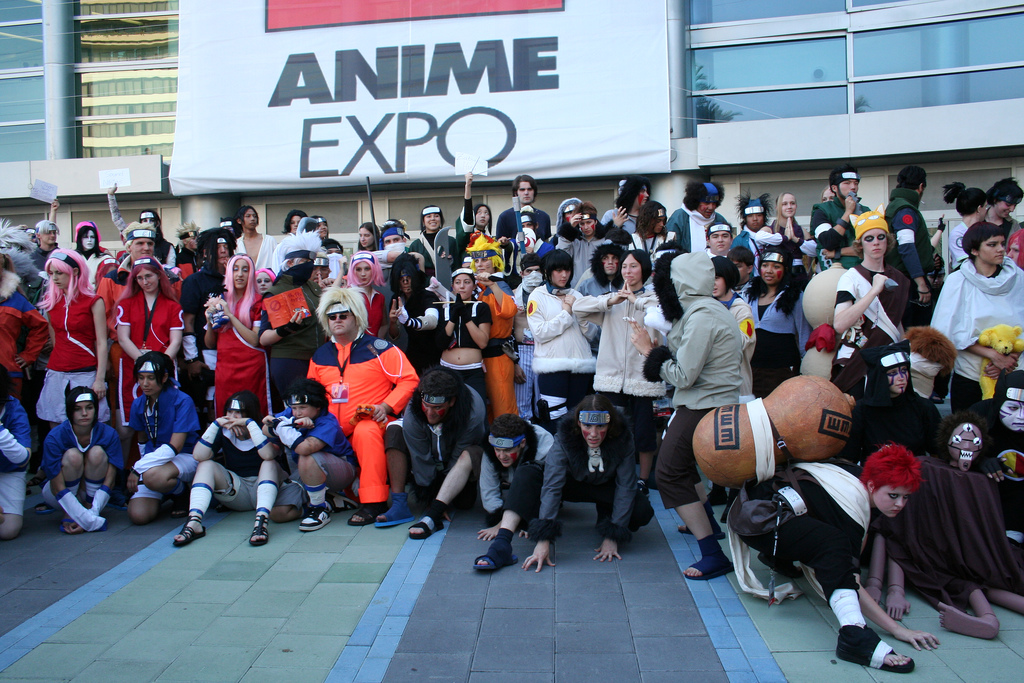
Many young people wearing anime character costumes visited the venue, and took part in a photo event and an exhibition of anime items

The horde has already taken over Anaheim, and no doubt sent their spys to Comi-con in San Diego.


Naruto Nerds. :P

Donnerstag, 22. Juli 2010

Oh Sarakao Oy


The Mynah Bird, in Khmer Sarakao, is a bird native to South and Southeast Asia. Khmer folklore has it that the Sarakao are wise and witty. One Khmer story speaks of a girl who turns into a mynah bird because of a wicked rival. Another speaks about how a sarakao was use to insult an unjust rich man.

I ran into a few sarakao in Cambodia. One was in a cage that I felt was too small for it while another was being transported on a large truck of a family that appears to be moving.

Samstag, 26. Dezember 2009

My Hometown.


Riverside City, Riverside County, California
Miene Freunden auf UCR, haben keine Aufwertung für Riverside. Ich glaube dass, wir viele schöne Plätze haben.