Posts mit dem Label Korea werden angezeigt. Alle Posts anzeigen

Samstag, 28. April 2012

Archaeological object of the day

Traditional Korean celadon from the Goryeo dynasty.

Dienstag, 24. April 2012

Old Man Yells at Cloud


So I hear that North Korea has threaten South Korea again and that was the first picture that came to mind. Seriously, North Korea seems more and more like a cartoon villain. 

Freitag, 17. Dezember 2010

Donnerstag, 9. Dezember 2010

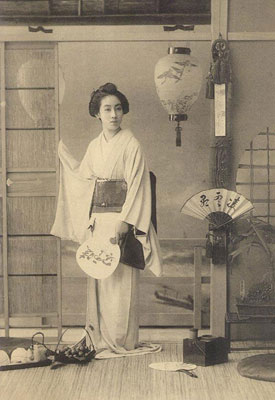
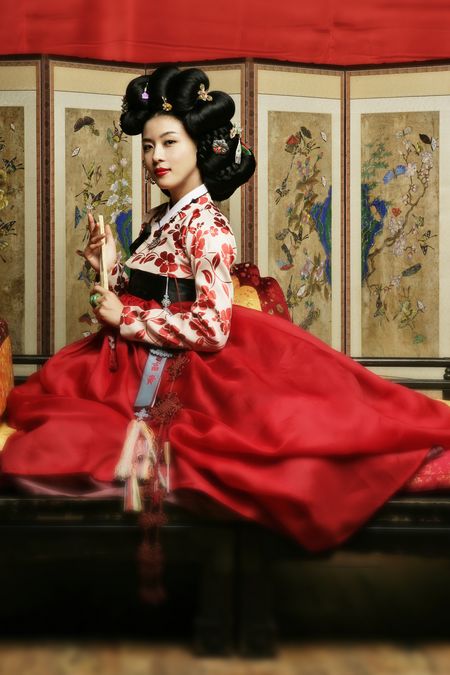
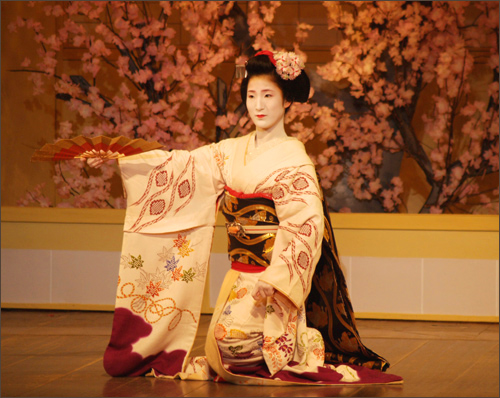
Gisaeng and Geisha: Then and now


Notice that modern portayals of Geisha and Gisaeng tends to emmulate western notions of orientalism and the hyper-feminization of Asian women.

Montag, 4. Oktober 2010

Archäologie


Sometimes it's easy to assume that a large tomb is a that of a king or a male ruler. Because of our current culture, we tend to associate the ruling class with men. It's all part of our blindness to the privileges we give to masculinity. However, through out history, men did not have the monopoly on power.
The Silla Kingdom of the Three Kingdoms period of Korea, was one of the countries vying for supremacy on the Korean peninsula. It's was largely thought that the tombs left behind by Silla was of male rulers. However one of the tomb has been argue to be a female co-ruler based on historical accounts as well as the images and goods left in the tombs.
The assumption that the tombs of the rulers were all male is an example of how our ideology can bias archaeology. We assumed that the Silla rulers were all men because we falsely correlated power with masculinity.

Sonntag, 3. Oktober 2010

Archäologie Lagen


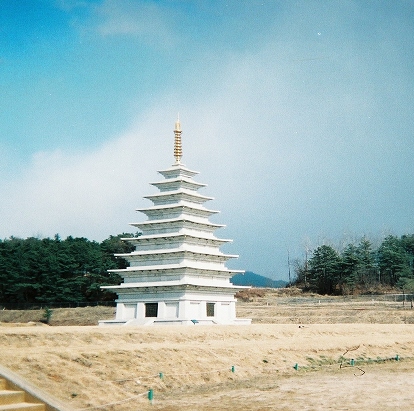
Miruksa was the largest Buddhist temple of the Baekje Kingdom (one of the three kingdoms of ancient Korea)

Montag, 27. September 2010

Can't wait for the season finally


I've been following Dong Yi for awhile. It's been building up for me (even though at this point most people lose interests because the main character, Choi Dong Yi, is no longer a struggling maid). Perhaps that has something to do with my fascination with political intrigue.

Sonntag, 12. September 2010

Archäologie


A Goryeo period celadon plate.

Donnerstag, 26. August 2010

Ethnography

This editions of Ethnography, I'm going to focus on the negotiation of group identity.


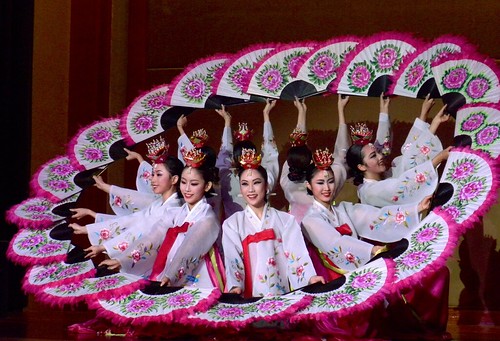
First let's start off with a Korean dance called Buchaechum (부채춤). Buchaechum has become very synonymous with various Korean celebrations ranging from Buddha's birthday to simple Church days. Buchaechum is a kinda of iconic of Korean culture (esepecially in it's design, make-up, and hanbok), so it is use to represent Korea in a universal way.


Next is Jeruselam Pride. Pride has always been been representing the LGBT culture in the most fabulous fasion possible through the body of the participants, the colors, and the music. But for Jeruselam's Pride, there is an added emphasis on the role of the secular Jewish community in promoting LGBT people as part of their own identity.


Food is always a way to declare one's ethnic identity, and therefore ethnic enclaves will have their food stuff served and readily availiable. Here is a sample of some of the food one can find in Little Phnom Penh in Long Beach, California. Long Beach is one of the biggest Khmer-American community.


The Cahuilla, like many other Native American tribes, seek to find a lost identity by riviving old arts and costoms.

Dienstag, 24. August 2010

On TV


Dong Yi
Set during the reign of King Sukjong in the Joseon dynasty, the story focuses on Dong Yi, a water maid who gains the trust of Queen Inhyeon and later the favour of the king when he is moved by her prayers for the health of the Queen during the court disputes caused by Jang Hee Bin. Dong Yi becomes a concubine with the rank of sook-bin and bears a son who will later become the 21st king of Joseon, Yeongjo

Samstag, 22. August 2009

태평무(太平舞)


이 춤을 평화를 위해 헌신입니다. 그것은 제국 춤이다.

Freitag, 21. August 2009

Music, again


And who says that the east is "trapped" in tradition. The truth is the east holds on to tradition while at the same time progress in to modernity. It's not a hard concept.

Dienstag, 9. September 2008

Korean Hanja


Hanja (한자/漢字) is basically the Korean word for Chinese character (Hànzì). (the Character Han (漢) refers to the Han people which is the main and largest ethnic group in China.)In specific, its those Chinese character that is used in Korea as the dominate writing system even after the invention of the Hangeul (한글) alphabet by King Sejong in the Choseon dynasty.

In modern times, Hanja has been replaced by Hangeul. There are some very valid reason for this:

1. Hanja often represented borrowed words from Chinese and thus does not address the native Korean words. This is a hindrance when trying to understand the Korean language which is polysyllabic and not tonal unlike Chinese which is monosyllabic and tonal.

2. Hangeul is much easier to read . . .(at least to those who knows how to read it.) The adoption of Hangeul

But for all these reason, Hanja still is a valuable part in Korean culture and thus should not disappear from Korea all together. Many ancient art and literature requires some understanding of Hanja to appreciate. It has been a integrated part of its government system and religious structure. Sure it's foreign, but so are cars yet those are kept. It provides diversity in language. And from an academic standpoint it shows diligence in study. Plus it prevents confusion. Take the Vietnamese Quốc Ngữ. While it allows readers to understand the sounds of the words, but it creates confusion because a single syllable can have different meaning by changing the slightest accent. For learners this can mean difficulty in remembering certain words. For Korean, its worst! Korean is not a tonal language and this there is no way to discern a syllable that has different meanings. Trying to change Chinese based words would be to cumbersome as it is already part of the society. It would be like the convoluted practice of replacing Latin base words with native English words or Japanese On-yomi (音読み) with western equivalents to fit in. The solution is to allow some hanja (certainly not all!) to remain part of the Korean language much like how Japanese Kanji is written with Hirigana (平仮名) and Katakana (片仮名). Hanja is an undeniable part of Korean Culture.