Posts mit dem Label Cambodia werden angezeigt. Alle Posts anzeigen

Mittwoch, 11. April 2012

Today in archaeology


A common sight in Angkor temples. What is it? It's a lingam on a yoni. What's that, you ask? It's a sacred representation of the infinity of Shiva, the primary deity in most Angkor temple prior to the conversion of the Khmers into Mahayana then Theravada Buddhism. You want a simpler explanation? 
It's a cock (lingam) penetrating a vagina (yoni). 


Sonntag, 1. April 2012

On the appearance of civilizaiton.

It must be the lack of sleep and coffee that's gotten me so jittery and crotchety. It's not usual for one to wake up in the morning cursing at their dreams for obvious intellectual laziness. Or I suppose it is if you stayed up until 4 AM killing hagravens and Foresworn on top of an ancient Nord ruin.


The feeling is mutual.

So I wake up this morning chastising myself because for some reason while in my dream I thought "Who built these ruins? They're so advance and just came out of nowhere". Damn it boy! You're an archæologist. You know goddamn well that's a stupid question. Civilizations don't come out of nowhere. They aren't just spontaneous. My problem with my in-dream reasoning is that it leads to presuppositions and it's intellectually lazy. It leads to presuppositions because when trying to rationalize the idea of "who built this advance civilization", the almost inevitable assumption is that something supernatural/out-worldly did it or that a civilization we're more familiar with did it. Case in point:


Nothing says authority like a poorly skilled hairdresser and a History Channel logo.

Ah History Channel - the only actual history covered is all about Hitler. But I've seems other reasoning that are just as bad. In the 19th century french explorer Henri Mouhot "rediscovered" the Angkor ruins in Cambodia, and his immediate reaction was similar to my dreams. (How he managed to rediscovered something that wasn't really lost is beyond me. The locals knew of the temples.) He was in disbelief of how grand the temple complex were. He could not reason with how advanced the temples seemed with how "backward" the locals were. And this lead to a subtle assumption: White(ish) people made it, because to Mouhot and many other people at the time, Western Europeans were the only capable of such feats. Presuppositions! And this has been used by all sorts of people: Some claim the civilizations of the Andes came from Japan because the vessels "looked similar". Some claim Nubians created the Olmec because of the facial features of the colossal head. Early British scholars assumed the creators of Great Zimbabwe were of Caucasian stock. Some believe the whole of the Americas were populated by Semitic people.


And for no reason, here's some subtle 18th century racism!

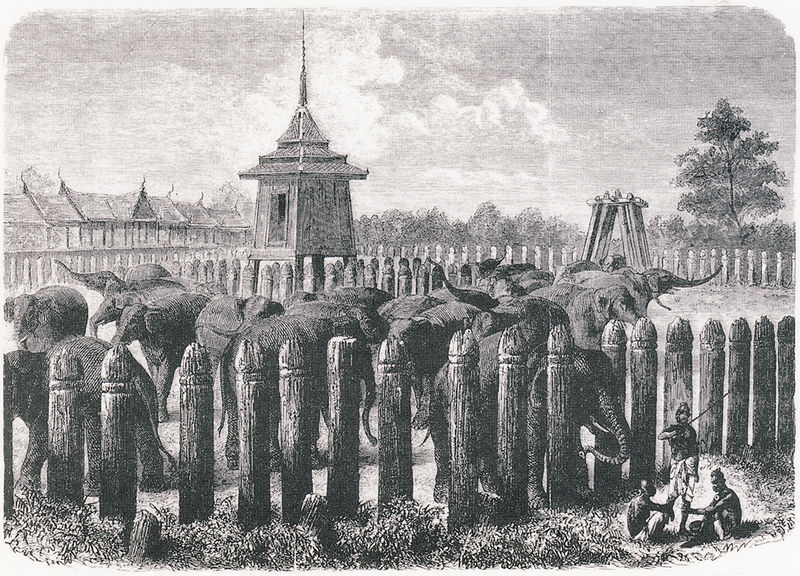
Now here's where the intellectually laziness comes in. The Nord ruins in Skyrim were already well explained in the history of the Elder Scrolls. Ysgramor lead the first humans out of Atmora to occupy Tamriel. They built the places. You would know that if read up on the materials ahead of time (some of which are available in-game.) It's also intellectually lazy to assume aliens created any of our modern civilization. You're explaining away a problem rather than doing the proper research. At the very least you should consider the more logical explanations. For Angkor, there existed ruins that dated before them namely Funan ruins, whose existence is recorded in both stonework and Chinese writings (in Oc Eo). As for why the current Khmers at the time of French Colonialism were not building large stone monuments: The Khmers underwent religious change from Hindu and Mahayana Buddhism to Theravada Buddhism. The new religion was not so demanding of their temples (though state leaders did build large temple to show their power, such as those at Udong, in modern Kandal Province, Cambodia.) More over, war with Ayutthaya (pictured above) sacked national resources. The kings no longer had the power to demand the peasant class to build as much as the Angkor kings did. The same goes for the example provided. The Olmecs didn't just appear. There were already numerous cultures predating the Olmec. The colossal heads by no means reflect realistic human heads and therefore couldn't be influenced by Nubians or other east African civilization (and fails completely anyway since the "typical" physical features of the Nubians and their descendants looked nothing like those heads). The superficial similarities between the pottery in the Andes and Jōmon (pre-Classical Japan) are just that - superficial. Anyone who studied those cultures can tell the difference between a Haniwa and Moche pot. The whole idea of the Americas being settle by Semitic people just blatantly ignores everything.


Sometimes I feel like I'm talking to Patrick Starfish when I try to pass those points to others

It's intellectually lazy because you're failing to think it through. You're failing to do the research. But it's all to common isn't it? I make archæological assumption all the time and most of us don't even know to question them. Some are so ingrained, we don't even see what's wrong because others may not see what's wrong. (Gender is one such concept where that happens.) So as I finish this noon with a strong cup of God-know-how-old coffee, I'll sit and hope people don't make the same bad thinking while awake that I did while asleep.

Donnerstag, 26. August 2010

Ethnography

This editions of Ethnography, I'm going to focus on the negotiation of group identity.


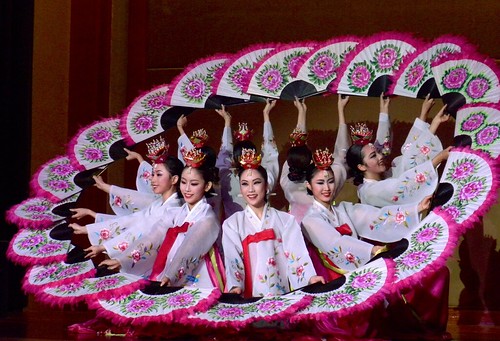
First let's start off with a Korean dance called Buchaechum (부채춤). Buchaechum has become very synonymous with various Korean celebrations ranging from Buddha's birthday to simple Church days. Buchaechum is a kinda of iconic of Korean culture (esepecially in it's design, make-up, and hanbok), so it is use to represent Korea in a universal way.


Next is Jeruselam Pride. Pride has always been been representing the LGBT culture in the most fabulous fasion possible through the body of the participants, the colors, and the music. But for Jeruselam's Pride, there is an added emphasis on the role of the secular Jewish community in promoting LGBT people as part of their own identity.


Food is always a way to declare one's ethnic identity, and therefore ethnic enclaves will have their food stuff served and readily availiable. Here is a sample of some of the food one can find in Little Phnom Penh in Long Beach, California. Long Beach is one of the biggest Khmer-American community.


The Cahuilla, like many other Native American tribes, seek to find a lost identity by riviving old arts and costoms.

Donnerstag, 19. August 2010

This is becoming an epidemic

More Cambodians are facing attacks with acid. The number of these incidences seems to be raising, though that could be due to increase media attention on the subject. There has been suggestions to restrict access to dangerous acid, but many of them are also necessary for industry. The government also plan to increase punishment for attacks. This will probably not help in that; the police force is inept anyways, it will result in more overcrowded prison, and it doesn't take down the core issue of violence in general.

Dienstag, 17. August 2010

They're Still There

Ever noticed, when going to a museum, how past culture are presented? Usually it's just by the extraordinary physical remains they leave behind. Stuff like pottery, sculpture, and architecture. In older museums, it really brings out the idea the the culture and/or people are gone. Well, it's wrong. They're still here. It's just that culture has changed, just like any culture, but they are still here and they can track back their current culture to the old one.

The Greeks:


When we talk about the Greek, we get ideas of gods and goddesses, fantastic stories, wars, and romance. We're told that it's an ancient time, when culture was at it's zenith. The Greeks however, are not some dead people that only the old story speaks about. Since the time of Antiquity, Greek culture has changed greatly going from Christianizing to domination by the Turks, to modernization. This has resulted in a rich new culture for the modern Greeks.
(Pic: Kostas Martakis is a Greek pop singer and model. Like the rest of Europe, Greece has adapted to pop-culture.)


The Khmers:


Visions of the Khmers either bring out the splendid images of Angkor or the genocide under Pol Pot. For some people, it's hard believe that the current Khmers were then ones who built Angkor. French explorer Henri Mouhot even deny that the agrarian Khmers could do it. But the historical and ethnographic evidence shows that it is the modern Khmers who made Angkor. They're not some lost civilization. They're still there.
(Pic: Pich Sophea is a pop icon in Cambodia. Cambodia has made strong efforts to prove to the international community that it is capable of bringing modernity to it's culture.)


The Thais:


What the Age of Imperialism has brought us is an Image of a rugged and exotic Siam filled with people that were so removed from modernity and western civilization. And with the way Thailand is advertised by travel agencies, it still looks like it's the exotic place. But such images denies the Thais their modernity. Modern Thailand has grown fast economically, resulting in ever increasing technological and global awareness by modern Thai peoples.
(Pic: Top Chaiwat is a Thai actor and model. Here we see a fashion show. Thailand has since become an important place of cultural exchange and development.)


The Mayans:


Old scientists have always wondered about the fate of the Mayans. Their temples were abandon and it seems the civilization has collapse. But the Mayans continue to exist. Their modern civilization is fraught with the effort of their ethnic groups to obtain rights and awareness in the international community.
(Pic: Rigoberta Menchú is a Nobel Peace Prize winner who dedicated here career to advancing rights for the K'iche' Mayans of Guatemala. Mayans suffer from invisibility and harassment, such as the one they faced under the CIA funded Contra.)

Donnerstag, 12. August 2010

To Be Honest, I Don't Trust Any Of You.


The current ruling party of Cambodia, is indeed a sellout party. They've only shown time and time again that they care more for corporate. interest than they do the interest of the people. Money flows into the system, but where is the money for environmental protection, health care, welfare and education? Needless to say, something is fucked up in Cambodia's Parliament. They've done little to stop environmental degradation, corporate exploitation, and exploitation of underprivileged citizens.


But Nationalists are no better. What Nationalist wants is nothing but fascism, feed through a populist ideal. They could really give a shit about improving the lives and environment of Cambodia. Look at all their rhetoric: They're either about returning to a glory day, waging war, or something that amounts to an ethnic cleansing. Sorry, but the "glory days" are gone. Cambodia needs to move on. Culture changes and the Khmer culture is no exception. (You think it hasn't? You've clearly haven't paid attention to the last 2000 years.) Khmer people should be proud of their culture, for sure, but what one generation wanted is not going to be what the next generation wants. War waging is pointless. Unless it's for defensive purposes, it's nothing more than a show of bravado that will lead to pointless deaths and lost of finances. Not to mention that Cambodia would lose face in the international community. All the anti-Vietnamese and anti-Thai rhetoric is nothing but unadulterated racism. It's just the same type of racism we see here in the United States against Latino immigrants: scapegoating and ethnocentrism. People migrate. People move. It's been like that in Cambodia for eons. Even during the Angkor period, there were massive amounts of people of different ethnic groups coming in and out. Sure, Vietnam has done a lot of fucked up things to Cambodia, and their current policy is just as invasive to Cambodia's national sovereignty, but this doesn't call for banning all immigration or killing them off. As for Thailand, well we all know they have issues right now. Thailand, like most of the world, suffers from the grand delusion of Nationalism feed by it's government to advert attention from the real problem. Khmer Nationalist, Viet Nationalist, Thai Nationalist and American Teabaggers all look the same to me: a bunch of ignorant gobshits who refuse to identify the real problems. You all yap like toy dogs who don't know that you're all privileged losers.


The real problem for Cambodia is internal. Cambodia need to reform it's economic policies, regulate corporations, increase production without infringing on the rights of hill tribes or degrading the environment further. Cambodia needs to focus on the education of it's people instead of stupid nationalist rhetoric. All these things the current government are failing. They fail and they fail hard. But honestly the nationalists don't help.

Mittwoch, 11. August 2010

Is the Indochinese Tiger Gone from Cambodia?


The Indochinese Tiger, one of the subspecies of the tiger, is feared to be extinct in Cambodia. It hasn't been spotted for three years. There are some areas that it could still be in. Environmental protection in Cambodia started relatively late in comparison to it's neighbor Thailand. Cambodia also faces illegal logging and the introduction of mining to it's economy. In the past, tigers and leopards were numerous. The public generally didn't notice their well being. Nowadays, all subspecies of tigers are facing dangers. In the last 200 years, humans have caused the extinction of 3 subspecies of tigers: the Bali tiger, the Javanese tiger, and the Caspian tiger. The South Chinese tiger is the most critically endangered of all the tigers, but things do not bode well for the Bengal, Siberian, Indochinese, Malay, and Sumatran tigers either.


But why should we care? Here's some reasons:


1. The predatory species is important in an ecosystem. They help maintain population balance.

2. Empathy is a good reason. After all, we are the ones responsible for their death. If it were an act of nature, it would be different.

3. Diversity of life is just one of those good things you want to have.

4. When a species goes extinct, it could very well indicate something else is wrong in an ecosystem. This in turn could impact humans.

Montag, 2. August 2010

Quick News

Another endangered Irrawaddy dolphin dies in a fishing net in the Mekong. Four such dolphins have died, as the the global population of river dolphins continue to decline.

Woman dies due to unsafe abortion in Camobodia. The problem of course is the lack of access to safe abortion and general medical care for many Cambodians. This is worsen by the lack of health education. Cambodian laws state that only license medical officials can perform abortion.

Teabagger fails. In an attempt to show their diversity, a teabagger rally ends up being overwhelmingly white and straight. The very few gay teabaggers there are, of course, idiots.

Fires in Russia.

Like American university graduates, Japanese university graduates are expected to face a small job market.

UNESCO to add Bikini Atoll as a heritage site. Bikini was used as a nuclear bomb test site by the United States during the Cold War. The natives of the island were relocated to another island where they suffered from starvation due to poor conditions there.

Dienstag, 27. Juli 2010

Southeast Asian Music pt. 1


One of the common misconception about Southeast Asian music is that they are all the same. This is not true of course there are fundamental differences in the construction and presentation of the music. If we look at modern Thai and Khmer pipat/pinpeat and mahori, there are subtle but important differences between the way the songs are constructed. These includes, how the melody shifts and how each music sequence start. The are different despite of their common ancestry. Musical genre is much like biological evolution: They change, adapting to either culture, region, class, religion, and time. Eventually, a musical tradition with common ancestry will become totally different from it's ancestor. Even close cultural neighbors like Cambodia, Thailand, and Laos will have differences in the construction of music. The court music of these nation are descendant of an older tradition dating back to Angkor but have since diverged. The similarities of the ensembles are noticeable but so is the differences.


(Pictured to the left is a crocodile zither formerly used in Burmese music. The use has since died but an analogous form of the instrument is still used by Thai and Khmer classical ensemble.)

Miller, T., & Sam, S. (1995). The Classical Musics of Cambodia and Thailand: A Study of Distinctions. Ethnomusicology. 39(2), 229-243.

Kiang Guek Ew: Guilty


Kiang Guek Ew, chief of S-21 prison, was sent to 30 years in prison for his involvement with the Khmer Rouge.

Donnerstag, 22. Juli 2010

Oh Sarakao Oy


The Mynah Bird, in Khmer Sarakao, is a bird native to South and Southeast Asia. Khmer folklore has it that the Sarakao are wise and witty. One Khmer story speaks of a girl who turns into a mynah bird because of a wicked rival. Another speaks about how a sarakao was use to insult an unjust rich man.

I ran into a few sarakao in Cambodia. One was in a cage that I felt was too small for it while another was being transported on a large truck of a family that appears to be moving.

Archäologie Lagen


Río Bec ist eine maya Lage auf Campeche. Sie hatte für sienen falchen Turm gewusst.


Phnom Bakheng ist eine khmer Lage auf Angkor. Sie ist eine pyramide.

Arsenic Wells

Via the Phnom Penh Post

High amounts of Arsenic in well water are afflicting as much as 150.000 rural Cambodians.

Chhiev Kimlorn, the village chief, said that 10 of the community’s 26 wells had
been tested. According to a document she was given by UNICEF, seven of them were
found to contain elevated arsenic levels.

Three were found to contain
arsenic levels as high as 500 parts per billion – more than 50 times the limit
considered safe by the World Health Organisation, and more than 10 times the
limit considered safe by the Ministry of Rural Development.

This is why I'm a big fan of environmental government policies. The individual villages aren't capable of fixing it on their own. They need the government to regulate and protect their water supply. Tap water can do only so much for these villager before they run out.

Dienstag, 20. Juli 2010

Parasitic Wasp - Now there's a Farmville idea!


Khmer farmers are awaiting the import of Apoanagyrus Lopezi, a parasitic wasp that will help farmers alleviate mealybugs infestation, from Thailand.
Thai farmers have already use the wasp as a natural pest control. It's much cheaper and overall healthier than pesticides, but could become an invasive species like the cane toads of Australia.
If you've ever seen parasitic wasp, it's like something from the Alien movies. The will lay their eggs in a host. When the egg hatch it will eat away at the host until it matures.

Donnerstag, 15. Juli 2010

Textbook Ban in Cambodia

Via The Phnom Penh Post

The Education Ministry recently decided to pull out text book that deals with sensitive issues in Cambodia. The books poised questions about such issues as human rights and democracy in Cambodia. People opposing the ban feels that the are being cheated out of vital knowledge.

Pulling out textbooks and revising them for political means of course is hardly just a Cambodian problem. Here in the United States, we have the Texas Board of Education trying to turn textbooks in to creationist, right-winged propaganda and peddle it off to millions of American students. We have creationist constantly trying to ban textbook that reveals scientific facts that opposes their mythology. In the early 2000 Japan was notorious for what was considered "white washing" of Japanese atrocities committed in the late 19th early 20th century. Turkey omits the Armani an genocide in it's textbook.

Montag, 12. Juli 2010

More Evictions in Cambodia

Via the Phnom Penh Post,


Hok Bunnat, president of Newspaper Distribution Association, sales her books and magazines in front of her house because the government has yet to compensate her and other vendors with new vending areas after evicting them from Borei Keila.

In the wake of Cambodia's economic development, it's abitious government is often criticized for not caring about the well being of it's citizens over attracting business and companies.

Montag, 1. Februar 2010

Better PR

The leader of the opposition party, Sam Rainsy, was recently arrested for removing border posts on the Cambodia-Vietnam border. The concern is that Vietnam was encroaching on Cambodian territory in secret, which is not uncommon in territorial dispute. Just earlier, Thai nationalist were arrested for attempting to alter the Cambodia-Thailand border post. Of course, let us remember that this whole border dispute is a product of colonialism. Prior, there was NO border definition amongst any of the states of Southeast Asia.
Well, Sam Rainsy is objecting that they are unfairly prosecuted and have evidence for their claim. They can rightfully claim so, since the government is riddle with lobbyist corruption. Ah, but Sam Rainsy isn't going to get by with just a prosecution claim. The problem is that the opposition is party is riddled with racist agenda. I don't disagree that the current government is a foreign sale out. Any educated Cambodian will know that Hun Sen is an eleitist power hungery brown-noser who follows the beckoning of the more powerful East Asian states. But what exactly do want to replace him with. Racist war-mongers aren't exactly an ideal candidate, yet that's exactly what Sam Rainsy has been portraying themselves to be. Ay, the whole issue of ethnic relations in post-colonial Southeast Asia could fill volumes and the Viet-Khmer relationship is just a part of that. Presenting yourself as racist isn't going to help your cause, especially for a country whose trying to get recognized by the international community. Yeah the Viets are stilling Khmer lands, but hey the Javanese are taking the Papauans' lands, the Burmese taking the Kayins' land. Don't claim your the only ones. Yes it is noble (to the extant that you believe in the nation state system) to guard your border, but bringing racism into it makes you no better than the enemies who probably considers you barbarians likewise (see pot kettle black).

Dienstag, 19. Januar 2010

Ratanakiri


So, I hear on the Phnom Penh Post that there has been tension between ethnic minorities in Ratanakiri and large timber companies. Considering the trend of ethnic rivalry in SEA, it shouldn't be a surprise. Still, I had hope (perhaps naively) that Cambodia's relation with it's ethnic minorities would be different. Especially since they share a history of genocide with each other. But alas, political and economic power wins out. It's not bad enough that logging in R'kiri has become server over the years. Now they are beginning to push the ethnic minorities there off their tribal land. (This should sound familiar to any American.)

Montag, 28. Dezember 2009

Bashing His Majesty

This past Christmas was spent with the relatives. Usually, there was karaoke, beer, food, and political talks on Cambodia. I didn't listen in much, mostly because I've heard them all and much of it was unverifiable. Nonetheless, I did catch a few words about His Majesty, Norodom Sihamoni. It wasn't good words.

Now before anyone state it, I'm not condemning negative talks against a Monarchy. I am very opposed to Thai laws restricting criticism of Royalties because it prevents any true freedom of speech. However, I will criticise nay-sayers of His Majesty. Not because I don't want people disrespecting the king, but rather because people refuse to disrespect the actual problem - the prime minister. This is Cambodia's own version of censorship. Since criticising the PM is dangerous, people deflect it on His Majesty. They say that HM lets so and so happens and isn't doing his job. Uh, hello? HM is just a figure head. The real power is with the PM, but no one outside of Cambodia has the guts to say it. (Surely, plenty of Khmer journalist based in the U.S. do, but I find their integrity rather faulty and often rather racist.)

So why are people criticising the king? Well duh he's an easy target. Sihamoni doesn't have the level of respect from Cambodian that His Majesty Bhumibol Adulyadej has in Thailand. Sihamoni isn't feared like Hun Sen, so whenever Hun Sen's cabinet screws up, it's much easier to mitigate the blame on the King (even easier to mitigate on a lower authority, of course.) So, what's the problem? You've got to be real. Put the blame where it belongs, not on the easiest target (that's called scapegoating don'tcha know.)

Mittwoch, 23. Dezember 2009

Parent's hometown

The rural villages of Battambong Province.
Meine Elterns kommen auf Battambong. Man kann viele Auckerland da finden. Als ich 17 Jahre alt war, hatte ich zu dem Dorf meiner Mutti gegagen.