Posts mit dem Label organism werden angezeigt. Alle Posts anzeigen

Mittwoch, 15. September 2010

This is so cool


Scientists has observed the transition of a species of skink from being egg laying to giving live birth. Evolution in action!

Donnerstag, 19. August 2010

Red is the New Green

Scientific America reports:

Researchers may have found a new form of chlorophyll, the pigment that plants, algae
and cyanobacteria use to obtain energy from light through photosynthesis.
Preliminary findings published August 19 in Science suggest that the newly
discovered molecule, dubbed chlorophyll f, has a distinct chemical composition
when compared with the four known forms of chlorophyll and can absorb more
near-infrared light than is typical for the photosynthetic pigments. Chlorophyll
f, which was extracted from cultures of cyanobacteria and other oxygenic
microorganisms, may allow certain photosynthetic life forms to harvest energy
from wavelengths of light that many of their competitors cannot use.
"This is
the most red-shifted chlorophyll we have found in nature," says Min
Chen
, a biologist at The University of Sydney in Australia and lead author
of the study. "That means that organisms that have this chlorophyll inside can
extend their photosynthetic range for maximum use of solar energy."
Montag, 16. August 2010

The stuff of your nightmares


And probably found in your backyard

Mittwoch, 11. August 2010

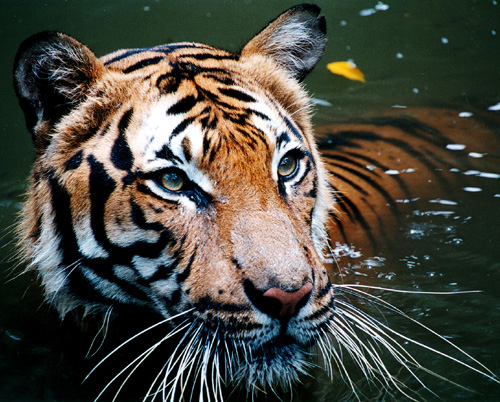
Is the Indochinese Tiger Gone from Cambodia?


The Indochinese Tiger, one of the subspecies of the tiger, is feared to be extinct in Cambodia. It hasn't been spotted for three years. There are some areas that it could still be in. Environmental protection in Cambodia started relatively late in comparison to it's neighbor Thailand. Cambodia also faces illegal logging and the introduction of mining to it's economy. In the past, tigers and leopards were numerous. The public generally didn't notice their well being. Nowadays, all subspecies of tigers are facing dangers. In the last 200 years, humans have caused the extinction of 3 subspecies of tigers: the Bali tiger, the Javanese tiger, and the Caspian tiger. The South Chinese tiger is the most critically endangered of all the tigers, but things do not bode well for the Bengal, Siberian, Indochinese, Malay, and Sumatran tigers either.


But why should we care? Here's some reasons:


1. The predatory species is important in an ecosystem. They help maintain population balance.

2. Empathy is a good reason. After all, we are the ones responsible for their death. If it were an act of nature, it would be different.

3. Diversity of life is just one of those good things you want to have.

4. When a species goes extinct, it could very well indicate something else is wrong in an ecosystem. This in turn could impact humans.

Freitag, 6. August 2010

To counter


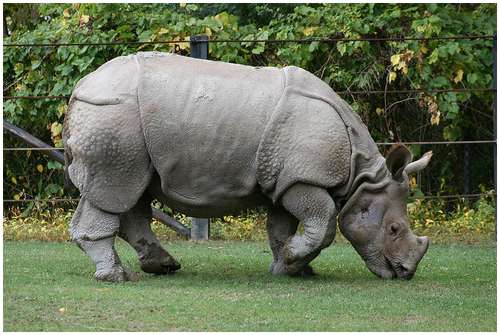
A Javanese Rhino. I dream of the day when Cambodians and Thai Kids can see these animals in the wild again. They, too, face poaching as well as encroachment from development.

Donnerstag, 29. Juli 2010

Phytoplankton Blues


Scientific America reports:


The microscopic plants that form the foundation of the ocean's food web are declining, reports a study published July 29 in Nature.

The tiny organisms, known as phytoplankton, also gobble up carbon dioxide to produce half the world's oxygen output—equaling that of trees and plants on land.

But their numbers have dwindled since the dawn of the 20th century, with unknown consequences for ocean ecosystems and the planet's carbon cycle.


This should be worrisome to anyone who appreciate fish at the dinner table. Ecologically, when there's problem at one of the food chain levels, the entire chain is impacted.

Dienstag, 27. Juli 2010

Nelumbo

Nelumbo is a genus of aquatic plants that are commonly called "lotus". There are two known living species and one known extinct species:

†Nelumbo aureavallis
Nelumbo lutea
Nelumbo nucifera

Nelumbo nucifera is a plant found throughout east, south, and southeast Asia. The roots, stem, pod, and seed can be eaten. The plant is cultivated in many parts of the world and is prized as a beautiful water flower to be used in ponds. It's also considered sacred in some religions.

Nelumbo lutea is found in the Southern United States, Parts of Central America, and the Caribbean. Like N. nucifera, N. lutea is edible. However it is not domesticated like N. nucifera, and grows wild.

Nelumbo aureavallis is an extinct Eocene species found from a few fossils of it's leaves and flower bud found in North Dakota.

Here's a lotus root recipe:

1/2 lotus root, sliced very thinly
1 piece of fresh ginger about 1 inch / 2 cm or so long, peeled and chopped
2 garlic cloved, peeled and chopped
1 1/2 cups of roughly chopped green onions
2 Tbs. hot red chili pepper, finely chopped Oil
Vinegar for the lotus root water
1 Tbs. sesame seeds
Pepper
1 1/2 Tbs. soy sauce
1 tsp. sesame oil
Put the sliced lotus root into vinegar water as you slice it, as described above. Drain well just before cooking.

Heat up a large frying pan with the oil. Add ginger and garlic, and stir fry until the oil is very fragrant. Add the drained lotus root slices in a single layer. Cook until the lotus root slices start to change color - they turn a bit translucent looking. Turn over and cook a couple more minutes.

Add the chili pepper and green onions, and stir-fry. Add the sesame seeds, pepper, soy sauce and sesame oil. The lotus roots should get a bit caramelized from the soy sauce. Serve hot or cold.

Donnerstag, 22. Juli 2010

Oh Sarakao Oy


The Mynah Bird, in Khmer Sarakao, is a bird native to South and Southeast Asia. Khmer folklore has it that the Sarakao are wise and witty. One Khmer story speaks of a girl who turns into a mynah bird because of a wicked rival. Another speaks about how a sarakao was use to insult an unjust rich man.

I ran into a few sarakao in Cambodia. One was in a cage that I felt was too small for it while another was being transported on a large truck of a family that appears to be moving.

Dienstag, 20. Juli 2010

Parasitic Wasp - Now there's a Farmville idea!


Khmer farmers are awaiting the import of Apoanagyrus Lopezi, a parasitic wasp that will help farmers alleviate mealybugs infestation, from Thailand.
Thai farmers have already use the wasp as a natural pest control. It's much cheaper and overall healthier than pesticides, but could become an invasive species like the cane toads of Australia.
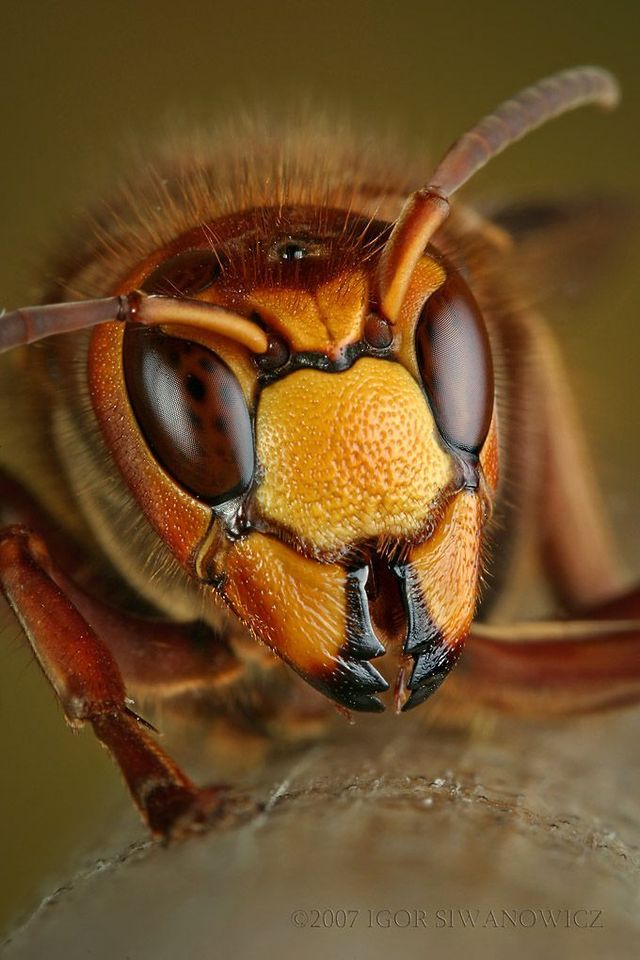
If you've ever seen parasitic wasp, it's like something from the Alien movies. The will lay their eggs in a host. When the egg hatch it will eat away at the host until it matures.

Donnerstag, 15. Juli 2010

Viola

Viola Tricolor, also known as Johny Jump Up and heartease, is a small annual plant that now grows wildly after it's introduction in the America's by settlers. You can often find them sold in home improvement stores and nurseries. The grow similarly to weeds in cultivated fields.
Viola Tricolor is a wild ancestor of the Pansy, which is a hybrid form of the Viola Tricolor. Like many domesticated plants, tricolor stated as a weed that would grow when the ground is disturbed during cultivation. People, however, noted how beautiful this weed is and began domesticating it. The result is the mass production of pansy plant. (Photos courtesy of Chris Ford )

Montag, 12. Juli 2010

What are you looking at?

Phidippus regius
Jumping Spider