I have noticed that there is a trend in getting sleeve tattoos. Back in the days, and by days I mean in Iron Age Europe, such tattoos could easily be an identifier of rank. Not only that, but if were are lucky enough, they can actually last thousands of years after a person death. Of course that would require a very specific environmental condition.
Science, Southeast Asia, Gay Stuff, Video Games, and Pop Culture all tied up in an occasionally German mess...
Posts mit dem Label Anthropology werden angezeigt. Alle Posts anzeigen
Sonntag, 10. Juni 2012
Montag, 21. Mai 2012
Montag, 23. April 2012
We weren't the only one (but you knew that)
It's been known for a while that H. Sapiens weren't the sole human species during the beginning of it's history. H. Neanderthalensis was around with us as well, and it has been theorize that we may have interbreed with their population. The Denisova hominin were around in northern Europe and in the Flores Island in Indonesia, the last vestige of the first wave of human migration lingered as H. Floresiensis. Or so we thought, anyway. There may be new evidence that another human species may have survived in China as the a contemporary of H. Sapiens. Skeletal remains found by Chinese minors, including jaw bones, have been concluded to be different from that as anatomical modern humans, but only dates back to about 14,500 years ago.
I think it's an intriguing thought. If Neanderthal studies have taught us anything is that these four non-modern humans were still just as capable of art and sophistication as modern humans. I will still hold reservations, of course. It's entirely possible for the differences in bone structure be caused by disease or other affliction. Still, it's a great thought.
Dienstag, 17. April 2012
Indigenous people of the Arctic
The Arctic region encompass eight nation states: Canada, Finland, Greenland (Denmark), Iceland, Norway, Russia, Sweden, and the United States. The geography and climate condition of the region can be described as foreboding, invoking an imagery of a cold and bitter landscape. Yet, people not only inhabit in this area, they thrive – contributing to a rich culture built on the relative isolation of the cold climate.
The Saami people are traditionally nomadic herders who lived in the northern reaches of Scandinavia. Having been traditionally isolated from the affairs of the rest of Europe, major attempts to include assimilate them occurred in the 17th century – comparatively late in regards to other European groups. Historically, Saami lands contained scattered ritual objects and sacrificial sites symbolizing a connection between the people and the landscape. Most of these sites fell into obscurity upon efforts to convert the Saami people into Lutheranism. Even so, the symbolism of these sites isn’t completely.
The Nivkhs lives in the far east of Russia. They speak a paleosiberian language – a group of languages not related to each other than being influenced by Tungusic and Turkic languages. It is theorized that they have been influential in the peopling of Manchuria, Korea and Japan as evidence of their cultural settlements have been found in those region. It is quite possible they had extensive interactions with the Ainu, another isolate group from Japan, though much of the data for that is lost. Like the Saami they are semi-nomadic, having settlements for winter and summer.
Aleuts are a significant group archaeologically, because they provide the model to how the peopling of the Americas occurred. The Aleuts are indigenous to Russia and Alaska share the same language family as the Inuit of the Americas and the Yupik that inhabits similar territories. Along with increased archaeological data, it helps supports the theory that the first people who arrived in the America did so from Asia during the last ice age. One interesting aspect of the cultures of these groups is that gender roles were permeable. Depending on conditions, it is not uncommon for the people to switch gender roles to favor their survival.
Icelanders are the indigenous people of Iceland and its main ethnic group. They are a Germanic people who speak the Nordic branch of the Germanic language. Due to their relative isolation from other Germanic groups, Icelandic reverted some of its Germanic sounds back to its Indo-European roots. Iceland provides us with the most complete source of Nordic Mythology written by Christian monks after the conversion of the islander. Despite conversion, there are still strong aspects of Norse belief in Iceland. It is estimated that half of all Icelanders still consider that elves might exists, for examples. Being short on biodiversity did not stop Icelander from expanding into agriculture and fishing. Indeed all but one mammal in Iceland were introduced by humans for agricultural purposes.
Late 9th century photo of Saami villagers
Photo of Nivkh men
Aleut dancers
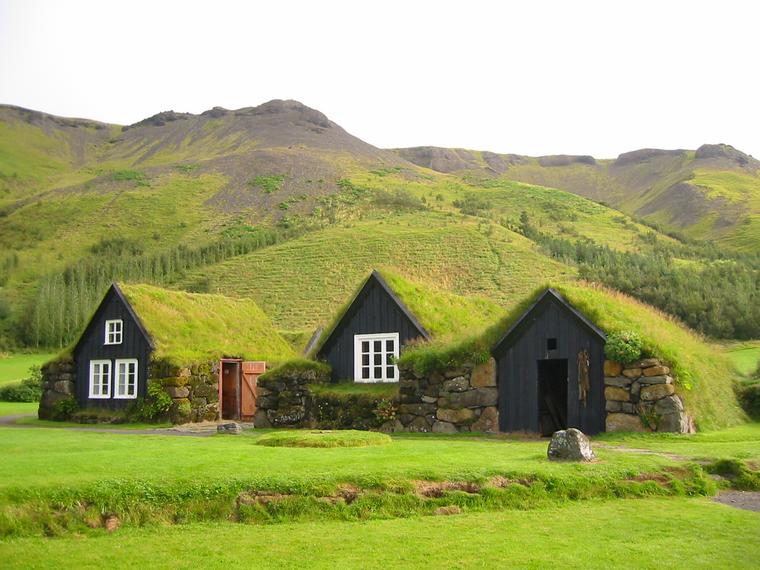
Turf houses in Iceland
Labels:
Alaska,
Anthropology,
Archaeology,
Canada,
Culture,
Finland,
Iceland,
Norway,
Russia,
Sweden
Sonntag, 1. April 2012
On the appearance of civilizaiton.
It must be the lack of sleep and coffee that's gotten me so jittery and crotchety. It's not usual for one to wake up in the morning cursing at their dreams for obvious intellectual laziness. Or I suppose it is if you stayed up until 4 AM killing hagravens and Foresworn on top of an ancient Nord ruin.

So I wake up this morning chastising myself because for some reason while in my dream I thought "Who built these ruins? They're so advance and just came out of nowhere". Damn it boy! You're an archæologist. You know goddamn well that's a stupid question. Civilizations don't come out of nowhere. They aren't just spontaneous. My problem with my in-dream reasoning is that it leads to presuppositions and it's intellectually lazy. It leads to presuppositions because when trying to rationalize the idea of "who built this advance civilization", the almost inevitable assumption is that something supernatural/out-worldly did it or that a civilization we're more familiar with did it. Case in point:


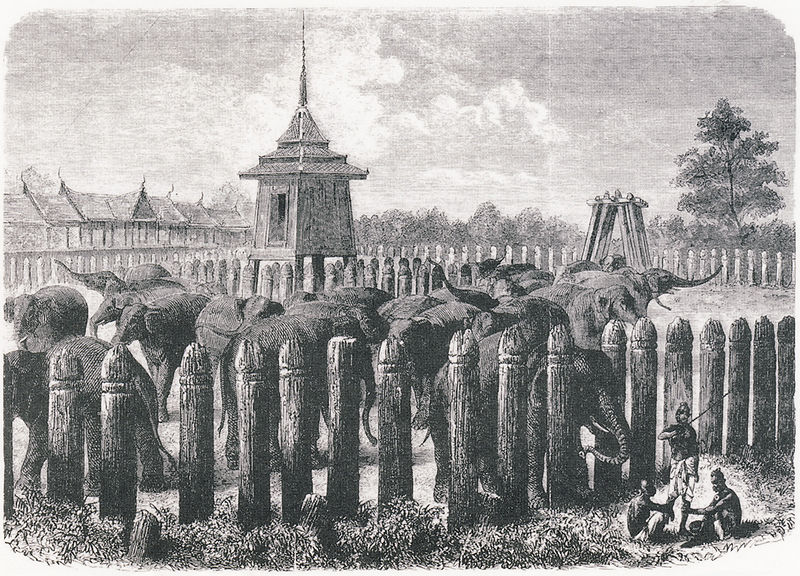
Now here's where the intellectually laziness comes in. The Nord ruins in Skyrim were already well explained in the history of the Elder Scrolls. Ysgramor lead the first humans out of Atmora to occupy Tamriel. They built the places. You would know that if read up on the materials ahead of time (some of which are available in-game.) It's also intellectually lazy to assume aliens created any of our modern civilization. You're explaining away a problem rather than doing the proper research. At the very least you should consider the more logical explanations. For Angkor, there existed ruins that dated before them namely Funan ruins, whose existence is recorded in both stonework and Chinese writings (in Oc Eo). As for why the current Khmers at the time of French Colonialism were not building large stone monuments: The Khmers underwent religious change from Hindu and Mahayana Buddhism to Theravada Buddhism. The new religion was not so demanding of their temples (though state leaders did build large temple to show their power, such as those at Udong, in modern Kandal Province, Cambodia.) More over, war with Ayutthaya (pictured above) sacked national resources. The kings no longer had the power to demand the peasant class to build as much as the Angkor kings did. The same goes for the example provided. The Olmecs didn't just appear. There were already numerous cultures predating the Olmec. The colossal heads by no means reflect realistic human heads and therefore couldn't be influenced by Nubians or other east African civilization (and fails completely anyway since the "typical" physical features of the Nubians and their descendants looked nothing like those heads). The superficial similarities between the pottery in the Andes and Jōmon (pre-Classical Japan) are just that - superficial. Anyone who studied those cultures can tell the difference between a Haniwa and Moche pot. The whole idea of the Americas being settle by Semitic people just blatantly ignores everything.

It's intellectually lazy because you're failing to think it through. You're failing to do the research. But it's all to common isn't it? I make archæological assumption all the time and most of us don't even know to question them. Some are so ingrained, we don't even see what's wrong because others may not see what's wrong. (Gender is one such concept where that happens.) So as I finish this noon with a strong cup of God-know-how-old coffee, I'll sit and hope people don't make the same bad thinking while awake that I did while asleep.
The feeling is mutual.
Nothing says authority like a poorly skilled hairdresser and a History Channel logo.
Ah History Channel - the only actual history covered is all about Hitler. But I've seems other reasoning that are just as bad. In the 19th century french explorer Henri Mouhot "rediscovered" the Angkor ruins in Cambodia, and his immediate reaction was similar to my dreams. (How he managed to rediscovered something that wasn't really lost is beyond me. The locals knew of the temples.) He was in disbelief of how grand the temple complex were. He could not reason with how advanced the temples seemed with how "backward" the locals were. And this lead to a subtle assumption: White(ish) people made it, because to Mouhot and many other people at the time, Western Europeans were the only capable of such feats. Presuppositions! And this has been used by all sorts of people: Some claim the civilizations of the Andes came from Japan because the vessels "looked similar". Some claim Nubians created the Olmec because of the facial features of the colossal head. Early British scholars assumed the creators of Great Zimbabwe were of Caucasian stock. Some believe the whole of the Americas were populated by Semitic people.
And for no reason, here's some subtle 18th century racism!
Now here's where the intellectually laziness comes in. The Nord ruins in Skyrim were already well explained in the history of the Elder Scrolls. Ysgramor lead the first humans out of Atmora to occupy Tamriel. They built the places. You would know that if read up on the materials ahead of time (some of which are available in-game.) It's also intellectually lazy to assume aliens created any of our modern civilization. You're explaining away a problem rather than doing the proper research. At the very least you should consider the more logical explanations. For Angkor, there existed ruins that dated before them namely Funan ruins, whose existence is recorded in both stonework and Chinese writings (in Oc Eo). As for why the current Khmers at the time of French Colonialism were not building large stone monuments: The Khmers underwent religious change from Hindu and Mahayana Buddhism to Theravada Buddhism. The new religion was not so demanding of their temples (though state leaders did build large temple to show their power, such as those at Udong, in modern Kandal Province, Cambodia.) More over, war with Ayutthaya (pictured above) sacked national resources. The kings no longer had the power to demand the peasant class to build as much as the Angkor kings did. The same goes for the example provided. The Olmecs didn't just appear. There were already numerous cultures predating the Olmec. The colossal heads by no means reflect realistic human heads and therefore couldn't be influenced by Nubians or other east African civilization (and fails completely anyway since the "typical" physical features of the Nubians and their descendants looked nothing like those heads). The superficial similarities between the pottery in the Andes and Jōmon (pre-Classical Japan) are just that - superficial. Anyone who studied those cultures can tell the difference between a Haniwa and Moche pot. The whole idea of the Americas being settle by Semitic people just blatantly ignores everything.
Sometimes I feel like I'm talking to Patrick Starfish when I try to pass those points to others
It's intellectually lazy because you're failing to think it through. You're failing to do the research. But it's all to common isn't it? I make archæological assumption all the time and most of us don't even know to question them. Some are so ingrained, we don't even see what's wrong because others may not see what's wrong. (Gender is one such concept where that happens.) So as I finish this noon with a strong cup of God-know-how-old coffee, I'll sit and hope people don't make the same bad thinking while awake that I did while asleep.
Labels:
Andes,
Anthropology,
Archaeology,
Cambodia,
Japanese,
Olmec,
Skyrim,
Video Games
Samstag, 11. Dezember 2010
Ethnography
Here is a modern Apache person. The reason I chose this photo is because I want to question our perception of indigenous people. In our society, we tend to look at indigenous people as archaic and outside of time. This is false. Indigenous people are, in fact, contemporay people.
Here is another indigenous group, the Ainu:
Donnerstag, 9. Dezember 2010
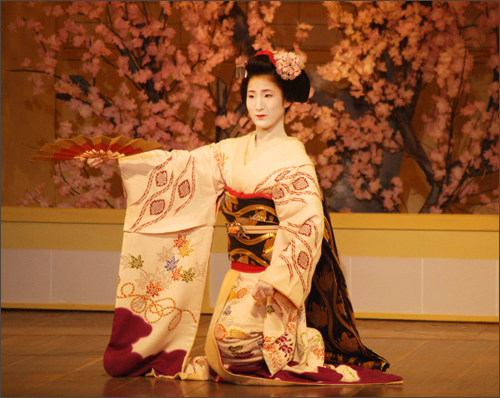
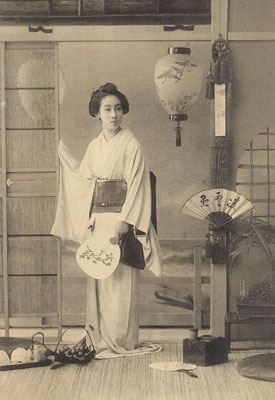
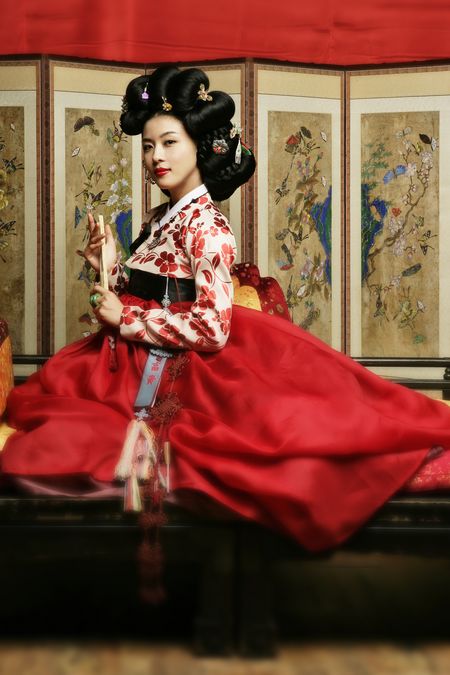
Gisaeng and Geisha: Then and now
Notice that modern portayals of Geisha and Gisaeng tends to emmulate western notions of orientalism and the hyper-feminization of Asian women.
Labels:
Anthropology,
Culture,
feminist POV,
Japanese,
Korea
Sonntag, 24. Oktober 2010
I'm not dead
Just hella busy. I've been doing school relate stuff and haven't had the time or the will to update regularly. I've also started doing Native American beadworks.
Labels:
Anthropology,
Art History,
Native American,
Personal
Montag, 4. Oktober 2010
Archäologie
Sometimes it's easy to assume that a large tomb is a that of a king or a male ruler. Because of our current culture, we tend to associate the ruling class with men. It's all part of our blindness to the privileges we give to masculinity. However, through out history, men did not have the monopoly on power.
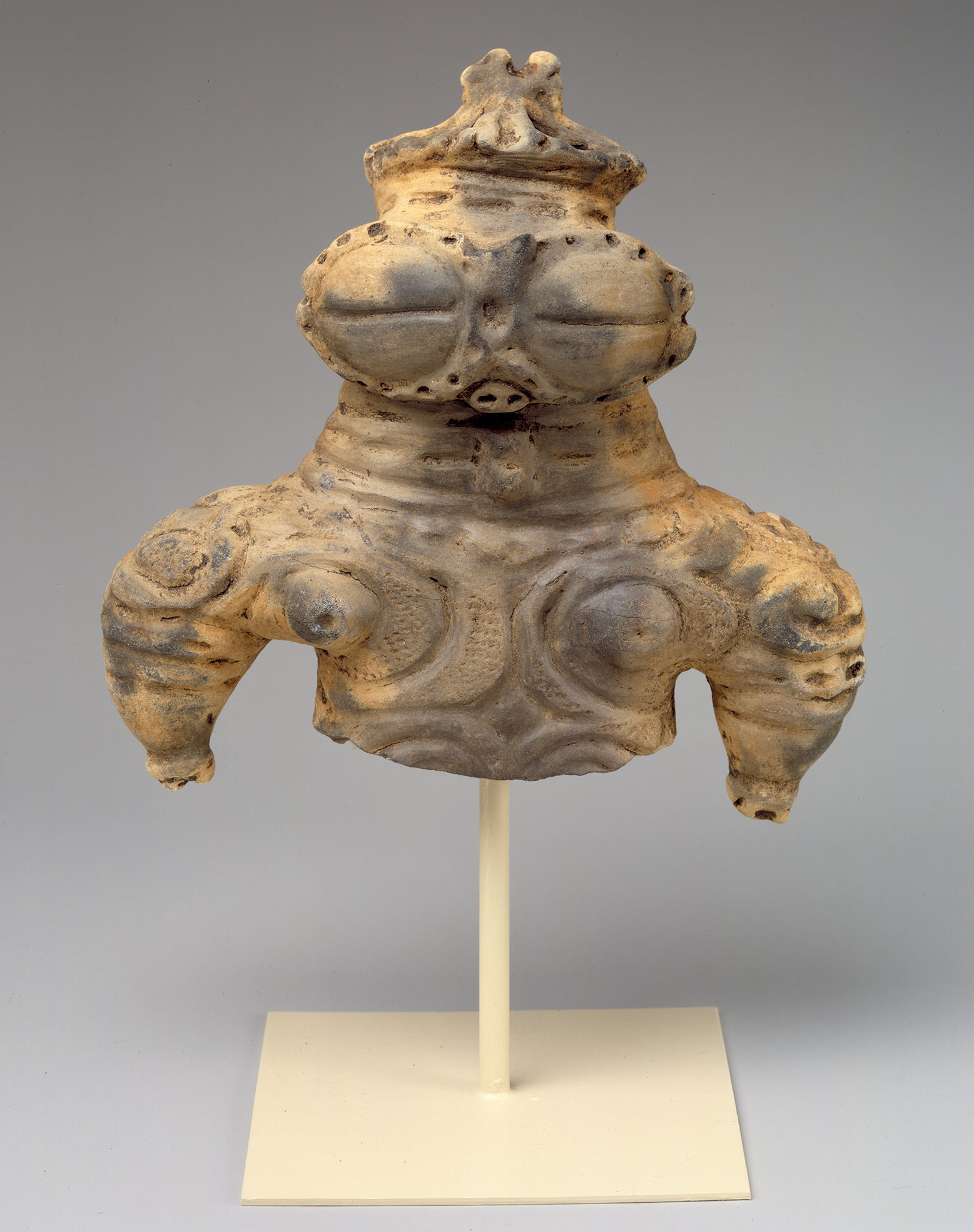
The Silla Kingdom of the Three Kingdoms period of Korea, was one of the countries vying for supremacy on the Korean peninsula. It's was largely thought that the tombs left behind by Silla was of male rulers. However one of the tomb has been argue to be a female co-ruler based on historical accounts as well as the images and goods left in the tombs.
The assumption that the tombs of the rulers were all male is an example of how our ideology can bias archaeology. We assumed that the Silla rulers were all men because we falsely correlated power with masculinity.
Mittwoch, 1. September 2010
Samstag, 28. August 2010
Donnerstag, 26. August 2010
Ethnography
This editions of Ethnography, I'm going to focus on the negotiation of group identity.

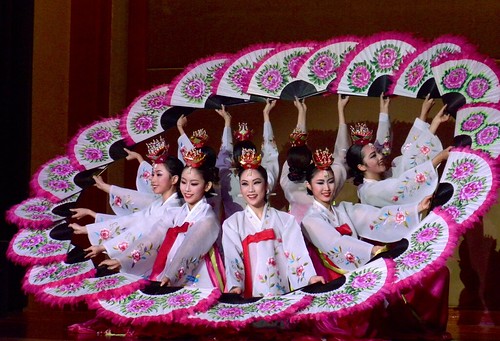
First let's start off with a Korean dance called Buchaechum (부채춤). Buchaechum has become very synonymous with various Korean celebrations ranging from Buddha's birthday to simple Church days. Buchaechum is a kinda of iconic of Korean culture (esepecially in it's design, make-up, and hanbok), so it is use to represent Korea in a universal way.

Next is Jeruselam Pride. Pride has always been been representing the LGBT culture in the most fabulous fasion possible through the body of the participants, the colors, and the music. But for Jeruselam's Pride, there is an added emphasis on the role of the secular Jewish community in promoting LGBT people as part of their own identity.
.jpg)
Food is always a way to declare one's ethnic identity, and therefore ethnic enclaves will have their food stuff served and readily availiable. Here is a sample of some of the food one can find in Little Phnom Penh in Long Beach, California. Long Beach is one of the biggest Khmer-American community.
First let's start off with a Korean dance called Buchaechum (부채춤). Buchaechum has become very synonymous with various Korean celebrations ranging from Buddha's birthday to simple Church days. Buchaechum is a kinda of iconic of Korean culture (esepecially in it's design, make-up, and hanbok), so it is use to represent Korea in a universal way.
Next is Jeruselam Pride. Pride has always been been representing the LGBT culture in the most fabulous fasion possible through the body of the participants, the colors, and the music. But for Jeruselam's Pride, there is an added emphasis on the role of the secular Jewish community in promoting LGBT people as part of their own identity.
.jpg)
Food is always a way to declare one's ethnic identity, and therefore ethnic enclaves will have their food stuff served and readily availiable. Here is a sample of some of the food one can find in Little Phnom Penh in Long Beach, California. Long Beach is one of the biggest Khmer-American community.
Labels:
Anthropology,
Asian American,
Cambodia,
Culture,
Food,
Gay Pride,
Israel,
Jewish,
Korea,
Native American,
Society,
United States
Dienstag, 17. August 2010
They're Still There
Ever noticed, when going to a museum, how past culture are presented? Usually it's just by the extraordinary physical remains they leave behind. Stuff like pottery, sculpture, and architecture. In older museums, it really brings out the idea the the culture and/or people are gone. Well, it's wrong. They're still here. It's just that culture has changed, just like any culture, but they are still here and they can track back their current culture to the old one.

When we talk about the Greek, we get ideas of gods and goddesses, fantastic stories, wars, and romance. We're told that it's an ancient time, when culture was at it's zenith. The Greeks however, are not some dead people that only the old story speaks about. Since the time of Antiquity, Greek culture has changed greatly going from Christianizing to domination by the Turks, to modernization. This has resulted in a rich new culture for the modern Greeks.


The Greeks:
When we talk about the Greek, we get ideas of gods and goddesses, fantastic stories, wars, and romance. We're told that it's an ancient time, when culture was at it's zenith. The Greeks however, are not some dead people that only the old story speaks about. Since the time of Antiquity, Greek culture has changed greatly going from Christianizing to domination by the Turks, to modernization. This has resulted in a rich new culture for the modern Greeks.
(Pic: Kostas Martakis is a Greek pop singer and model. Like the rest of Europe, Greece has adapted to pop-culture.)
The Khmers:
Visions of the Khmers either bring out the splendid images of Angkor or the genocide under Pol Pot. For some people, it's hard believe that the current Khmers were then ones who built Angkor. French explorer Henri Mouhot even deny that the agrarian Khmers could do it. But the historical and ethnographic evidence shows that it is the modern Khmers who made Angkor. They're not some lost civilization. They're still there.
(Pic: Pich Sophea is a pop icon in Cambodia. Cambodia has made strong efforts to prove to the international community that it is capable of bringing modernity to it's culture.)
The Thais:
What the Age of Imperialism has brought us is an Image of a rugged and exotic Siam filled with people that were so removed from modernity and western civilization. And with the way Thailand is advertised by travel agencies, it still looks like it's the exotic place. But such images denies the Thais their modernity. Modern Thailand has grown fast economically, resulting in ever increasing technological and global awareness by modern Thai peoples.
(Pic: Top Chaiwat is a Thai actor and model. Here we see a fashion show. Thailand has since become an important place of cultural exchange and development.)
The Mayans:
Old scientists have always wondered about the fate of the Mayans. Their temples were abandon and it seems the civilization has collapse. But the Mayans continue to exist. Their modern civilization is fraught with the effort of their ethnic groups to obtain rights and awareness in the international community.
(Pic: Rigoberta Menchú is a Nobel Peace Prize winner who dedicated here career to advancing rights for the K'iche' Mayans of Guatemala. Mayans suffer from invisibility and harassment, such as the one they faced under the CIA funded Contra.)
Samstag, 7. August 2010
The Gay Gene Thing
Talk to a homosexual, a bisexual, or a transexual and they will tell you "it's not a choice". My dick doesn't erect for the opposite sex (Sorry ladies, lol), and no amount of ex-gay therapy is going to change that (since being ex-gay is demonstrably bullshit). It's something we were born with and knew about. Even in my time in the closet and in denial, I couldn't deny the fact that I've been "like that" and will always be "like that".
Talk to a bigot and they will tell you it's a choice, an ugly lifestyle, and spout a few verse from a man-made holy book. They can't let it be a innate thing, because then it takes away their control, and it's always about control with their crowd.
Now talk to science. Unfortunately for bigots, science tends lean towards the gay side. Not that bigots care what science have to say, mind you. The evidence is there, though. Increasingly, scientific studies are showing that homosexuality has a strong genetic factor.
Though, it's not understood how or why. Genetic studies are still making it's way in completing the picture of a lot of other human traits. We still, for example, have conflicts over why OCA2, one of the genes responsible for light skin pigmentation and albinism's, was selected. Though we have evidence that it was strongly selected in some population and developed as a result of genetic drift in other populations. The genetic components of homosexuality (in males, at least though it could very well be the case for females as well) is revealed be inheritable matralinially. In fact, it appears that male homosexuality may increase reproductive fitness in females and possibly inherited through the X chromosome. However, genes are not islands. Some traits are influenced by both genes and the environment. Some genes code for more than one trait or function. Some traits or functions are covered by more than one gene. All these will influence the study of the genetic component of Homosexuality. Drawing back from OCA2, it's expression changes from area to area. It's also not the only gene to code for light skin: SLC45A2 and MC1R also covers skin pigmentation as well as other necessary functions. Further study is needed to understand these things. But the evidence that it exist is there. And one thing is clear: it's being selected for.
Why is it being selected?
It's hard to say. One of the theory is that homosexual individuals will increase the reproductive fitness of siblings. A sibling's child is actually very closely related to the individual in terms of genetics. They're pretty much almost like you're own child. This theory is called the gay uncle/aunt theory. It could also be due to the fact that being gay doesn't actually affect reproductive fitness, because a human homosexual individual still can sexually reproduce. Another aspect is that it maybe a social community development. In the same way females ant and bee workers are not sexual reproductive but important aspect in keeping their species functional, homosexual individuals may have the same function. In many animals, homosexual individual can and do adopt children and provide care for other members of their species. Homosexuality may also be selected for because the genes involve may code for something else. APO-E is a gene that is necessary for catabolism but also have strong links to Alzheimer's. Alzheimer's is then selected for. Since Alzheimer's doesn't affect the fitness of the individual during their reproductive life, it isn't a hindrance.
What are the implications?
DNA Magazine's issue 121 published an article entitled "The Science of Sexuality" and posed a question that provoked me to write this pieces:
The answer is yes, zealots will try. Zealots have tried. They have tried with stuff like eugenics. They've tried with race, with class, and recently against lesbians. But it won't work. As I've stated before, it's likely that these gene has more than one function . There fore any attempt and shutting them off will result in shutting off an necessary function. More over, we can't do it for ethical reasons. If we can shut off homosexuality, then we can shut off a whole lot of other traits. We'd be eliminating the natural diversity of the of the human genome. We should pride our self on being different. We shouldn't strive to make the human race look and act like clones. We're humans. Homosexuals are humans with a different variable on sexual attraction. As long as our relations remain consensual (somethings fundamentalist can't seem to fathom), we're harming no one.
Edit: I'm also a fan of being different. People can chose the life that they want to chose as long as they do not harm other people or infringe on other people's rights. That's right fundies, you can believe whatever the fuck you want as long as you don't infringe on other people's rights.
Iemmola, F., & Ciani, AC. (2009). New Evidence of Genetic Factors Influencing Sexual Orientation in Men: Female Fecundity Increase in the Maternal Line. Archives of Sexual Behaviors. 33(3), DOI: 10.1007/s10508-008-9381-6
Edwards, M., Bigham, A., Tan, JZ, Li, SL., Gozdzik, A., Ross, K., Jin, L., & Parra EJ. (2010) Association of the OCA2 Polymorphism His615Arg with Melanin Content in East Asian Populations: Further Evidence of Convergent Evolution of Skin Pigmentation. PLoS Genetics, 6(3), e1000867
Johanson, HC., Chen, W., Wicking, C., & Sturm, RA. (2010) Inheritance of a novel mutated allele of the OCA2 gene associated with high incidence of oculocutaneous albinism in a Polynesian community. International Journal of Cancer, 125(4), 909-917
Mengel, J., Wong, TH., Morling, N., Rees, JL., & Jackson, IJ. (2009). Genetic determinants of hair and eye colours in the Scottish and Danish populations. BMC Genetics, 2009, 10, doi:10.1186/1471-2156-10-88
Bailey, JM., Pillard, RC., Dawood, K., Miller, MB., Farrer, LA., Trivedi, S. & Murphy, RL. (1999) A family history study of male sexual orientation using three independent samples. Behavior Genetics. 29, 79–86
Talk to a bigot and they will tell you it's a choice, an ugly lifestyle, and spout a few verse from a man-made holy book. They can't let it be a innate thing, because then it takes away their control, and it's always about control with their crowd.
Now talk to science. Unfortunately for bigots, science tends lean towards the gay side. Not that bigots care what science have to say, mind you. The evidence is there, though. Increasingly, scientific studies are showing that homosexuality has a strong genetic factor.
Though, it's not understood how or why. Genetic studies are still making it's way in completing the picture of a lot of other human traits. We still, for example, have conflicts over why OCA2, one of the genes responsible for light skin pigmentation and albinism's, was selected. Though we have evidence that it was strongly selected in some population and developed as a result of genetic drift in other populations. The genetic components of homosexuality (in males, at least though it could very well be the case for females as well) is revealed be inheritable matralinially. In fact, it appears that male homosexuality may increase reproductive fitness in females and possibly inherited through the X chromosome. However, genes are not islands. Some traits are influenced by both genes and the environment. Some genes code for more than one trait or function. Some traits or functions are covered by more than one gene. All these will influence the study of the genetic component of Homosexuality. Drawing back from OCA2, it's expression changes from area to area. It's also not the only gene to code for light skin: SLC45A2 and MC1R also covers skin pigmentation as well as other necessary functions. Further study is needed to understand these things. But the evidence that it exist is there. And one thing is clear: it's being selected for.
Why is it being selected?
It's hard to say. One of the theory is that homosexual individuals will increase the reproductive fitness of siblings. A sibling's child is actually very closely related to the individual in terms of genetics. They're pretty much almost like you're own child. This theory is called the gay uncle/aunt theory. It could also be due to the fact that being gay doesn't actually affect reproductive fitness, because a human homosexual individual still can sexually reproduce. Another aspect is that it maybe a social community development. In the same way females ant and bee workers are not sexual reproductive but important aspect in keeping their species functional, homosexual individuals may have the same function. In many animals, homosexual individual can and do adopt children and provide care for other members of their species. Homosexuality may also be selected for because the genes involve may code for something else. APO-E is a gene that is necessary for catabolism but also have strong links to Alzheimer's. Alzheimer's is then selected for. Since Alzheimer's doesn't affect the fitness of the individual during their reproductive life, it isn't a hindrance.
What are the implications?
DNA Magazine's issue 121 published an article entitled "The Science of Sexuality" and posed a question that provoked me to write this pieces:
"What happens if a specific gene or biological trigger is identified as being
responsible for same-sex attraction? Could that mean there'll be a 'cure'? Will
some zealot try to eradicate homosexuality?"
The answer is yes, zealots will try. Zealots have tried. They have tried with stuff like eugenics. They've tried with race, with class, and recently against lesbians. But it won't work. As I've stated before, it's likely that these gene has more than one function . There fore any attempt and shutting them off will result in shutting off an necessary function. More over, we can't do it for ethical reasons. If we can shut off homosexuality, then we can shut off a whole lot of other traits. We'd be eliminating the natural diversity of the of the human genome. We should pride our self on being different. We shouldn't strive to make the human race look and act like clones. We're humans. Homosexuals are humans with a different variable on sexual attraction. As long as our relations remain consensual (somethings fundamentalist can't seem to fathom), we're harming no one.
Edit: I'm also a fan of being different. People can chose the life that they want to chose as long as they do not harm other people or infringe on other people's rights. That's right fundies, you can believe whatever the fuck you want as long as you don't infringe on other people's rights.
Iemmola, F., & Ciani, AC. (2009). New Evidence of Genetic Factors Influencing Sexual Orientation in Men: Female Fecundity Increase in the Maternal Line. Archives of Sexual Behaviors. 33(3), DOI: 10.1007/s10508-008-9381-6
Edwards, M., Bigham, A., Tan, JZ, Li, SL., Gozdzik, A., Ross, K., Jin, L., & Parra EJ. (2010) Association of the OCA2 Polymorphism His615Arg with Melanin Content in East Asian Populations: Further Evidence of Convergent Evolution of Skin Pigmentation. PLoS Genetics, 6(3), e1000867
Johanson, HC., Chen, W., Wicking, C., & Sturm, RA. (2010) Inheritance of a novel mutated allele of the OCA2 gene associated with high incidence of oculocutaneous albinism in a Polynesian community. International Journal of Cancer, 125(4), 909-917
Mengel, J., Wong, TH., Morling, N., Rees, JL., & Jackson, IJ. (2009). Genetic determinants of hair and eye colours in the Scottish and Danish populations. BMC Genetics, 2009, 10, doi:10.1186/1471-2156-10-88
Bailey, JM., Pillard, RC., Dawood, K., Miller, MB., Farrer, LA., Trivedi, S. & Murphy, RL. (1999) A family history study of male sexual orientation using three independent samples. Behavior Genetics. 29, 79–86
Donnerstag, 5. August 2010
Sonntag, 1. August 2010
Southeast Asian Music pt. 2
Modernization has meant, for some areas of Southeast Asian society, westernization. Many nation have come up with ways of "preserving" or celebrating perceived cultural uniqueness while incorporating modernism. While Western and East Asian style pop music has become popular in Southeast Asia, so too has more localized music traditions.
Morlam is the musical tradition of Lao people in Thailand and Laos. Here is a look at a more traditional morlam performance from Laos:
Like Enka of Japanese tradition, Morlam evolved to become an iconic pop music of Thailand. Traditional instruments are replaced by electronic ones. Dancers are dress eccentrically. It has be come fabulous, much like the Carnival of the west. Bands go from city to city, and perform at various venues.
Another such tradition following this trend is Dangut, a musical tradition from Indonesia with heavy South Asian and Middle Eastern influence.
Dienstag, 27. Juli 2010
Southeast Asian Music pt. 1
One of the common misconception about Southeast Asian music is that they are all the same. This is not true of course there are fundamental differences in the construction and presentation of the music. If we look at modern Thai and Khmer pipat/pinpeat and mahori, there are subtle but important differences between the way the songs are constructed. These includes, how the melody shifts and how each music sequence start. The are different despite of their common ancestry. Musical genre is much like biological evolution: They change, adapting to either culture, region, class, religion, and time. Eventually, a musical tradition with common ancestry will become totally different from it's ancestor. Even close cultural neighbors like Cambodia, Thailand, and Laos will have differences in the construction of music. The court music of these nation are descendant of an older tradition dating back to Angkor but have since diverged. The similarities of the ensembles are noticeable but so is the differences.
(Pictured to the left is a crocodile zither formerly used in Burmese music. The use has since died but an analogous form of the instrument is still used by Thai and Khmer classical ensemble.)
Miller, T., & Sam, S. (1995). The Classical Musics of Cambodia and Thailand: A Study of Distinctions. Ethnomusicology. 39(2), 229-243.
Freitag, 18. September 2009
Various Tai performances
Tai Lue: Northern Thailand, Xishuangbanna Dai Automnous Prefecture
Lao: Laos, Issan- Thailand
Tai Dam: Thailand, Laos, Vietnam
Thai: Thailand
Shan: Thailand, Shan State- Burma, Yunan- China
Donnerstag, 27. August 2009
Austro-Asiatic people

The Austro-Asiatic people is a ethno-linguistic people in Southeast Asia. Linguistically, there are differences on how the language families should be divided. Two recent proposal for the classification of the language families comes from Gérard Diffloth and Ilia Peiros. The majority of Austro-Asiatic speakers are minority hill tribes ranging across east India, Bangladesh, Myanmar, Thailand, Laos, Vietnam, China, Cambodia, and peninsular Malaysia. Only Mon, Khmer, and Vietnamese has ever had long recorded histories and kingdoms. Only Khmer and Vietnamese today remain an official language. (Picture of Palaung girls in Northern Thailand.)
Culturally, the different linguistic groups are quite diverse. Both Mon and Khmer have heavy Indian influences as shown in the borrowing of Pali words, Theravada Buddhism, Architecture, and Clothing. Vietnamese on the other hand, had heavy Sinicization due to many years of domination by various Chinese Dynasty. As a result, Vietnamese draw from Mahayana Buddhism, have many cognates with Chinese (in particular Cantonese), and other Chinese elements. Despite this, the majority of Austro-Asiatic speakers still retain some indigenous cultural aspects such as different kinship structure and a tendency towards animism. (Pictures of Khmu people in Northern Laos.)
The Khmer people established their fist kingdom as Funan as recorded by Chinese records. This later would be over thrown by Chenla and later Angkor. Angkor would later dominate large portions of modern day Vietnam, Thailand, Cambodia, and Laos. The Angkor dynasty would end due to internal changes as well as attacks from the newly formed Tai kingdom of Ayutthaya. This leads to a now Theravada kingdom and into a "dark age." Eventually, the Khmer people would go under French protectorate as a result of colonization. A few decades after independence from the French, they would face a civil war and a genocide at the hands of the Khmer Rouge. In modern times, Khmer people are the majority of the country of Cambodia but also have significant presence in Thailand and Vietnam. Khmers practice Theravada Buddhism, imported from Sri Lanka, with elements of Hinduism and animism. They use the Khmer script, a member of the Bhramic script family. Thai and Lao Scripts are descendants of Khmer script. Khmer legends claims that they are descendants of an Indian prince and a Naga princess. (Picture of a Khmer Royal Ballet dancer as Sovan Macha the mermaid who attempt to seduce Hanuman from the epic Ramayana.)
The Viets are regarded to be one of the Yue peoples found in Chinese historical records. They would first go under domination from the Han dynasty, with subsequent Independence and revolts. They are again dominated by the Sui and Tang receiving independence in the Ngô Dynasty. By then end of the Trần Dynasty and Hồ Dynasty, they are again overtaken by the Ming. Eventually, they received independence again until the collapse of Nguyễn Dynasty under French occupation. Subsequently they go through independence and then the Vietnam War. They unify under the Communist regime but thaw towards free market economic system in the end of the 20th century. Viets are in the southern most part of China, they are the majority of Vietnam and have presence in Cambodia, and Laos. There is also a large number of Vietnamese in the United States due to the Vietnam War. Viets practice Mahayana Buddhism, Confucianism, Taoism, Cao Dao, and Catholicism. Vietnamese employs Quốc Ngữ which comprises of Latin characters to suit their phonology and was developed by missionaries. Historically, Vietnamese used Classical Chinese and Chữ Nôm which is a derivative of Chinese. Vietnamese legends claim that they are children of the Red Dragon. (Picture of a Viet woman in a Modern áo dài. Historically, female dress were similar to male dress. After French influences, female dress became more tight fitting to reveal the body. It is derived from the Manchu Qipao/Cheongsam from the Qing.)
The Mon people had a several kingdoms in what is now modern day Myanmar. Their script would be adapted by the Burmese as their script. After they fall to the Burmese they would be scattered into modern day Thailand and Myanmar. In modern time, they represents on of the ethnic groups in Myanmar seeking independence. Mon are Theravada Buddhist with elements of animism. Mon use the mon script, which is a member of the Bhramic family. Burmese, Shan, Dai, and Lana are derived from Mon script. (Picture of a Mon celebration. Note that the dress worn is similar to dress found throughout Southest Asia (continental and insular) due to Indian influences.)
Other Austro-Asiatic people include the Khmu, the Palaung, Orang Asli in Malaysia, Nicobar natives, Munda hill tribes, and numerous other small ethnic groups. Their cut lure varies greatly depending on environment and location. For the most part most of these groups lack their own writing system. They are also often politically marginalized. Religious affiliations vary from tribe to tribe. (Picture of Munda women.)
(Picture of Orang Asli women. Asli are the indigenous people of peninsular Malaysia. They are often grouped with other indigenous people in Sarawak and Sabah although linguistically those people are not related to the Asli.)
On a side note: Why can't I ever get pictures of men? Whenever you google or yahoo the names of the tribes, you get mostly women. Not that it's a bad thing but men are part of their culture too. XD
Culturally, the different linguistic groups are quite diverse. Both Mon and Khmer have heavy Indian influences as shown in the borrowing of Pali words, Theravada Buddhism, Architecture, and Clothing. Vietnamese on the other hand, had heavy Sinicization due to many years of domination by various Chinese Dynasty. As a result, Vietnamese draw from Mahayana Buddhism, have many cognates with Chinese (in particular Cantonese), and other Chinese elements. Despite this, the majority of Austro-Asiatic speakers still retain some indigenous cultural aspects such as different kinship structure and a tendency towards animism. (Pictures of Khmu people in Northern Laos.)
The Khmer people established their fist kingdom as Funan as recorded by Chinese records. This later would be over thrown by Chenla and later Angkor. Angkor would later dominate large portions of modern day Vietnam, Thailand, Cambodia, and Laos. The Angkor dynasty would end due to internal changes as well as attacks from the newly formed Tai kingdom of Ayutthaya. This leads to a now Theravada kingdom and into a "dark age." Eventually, the Khmer people would go under French protectorate as a result of colonization. A few decades after independence from the French, they would face a civil war and a genocide at the hands of the Khmer Rouge. In modern times, Khmer people are the majority of the country of Cambodia but also have significant presence in Thailand and Vietnam. Khmers practice Theravada Buddhism, imported from Sri Lanka, with elements of Hinduism and animism. They use the Khmer script, a member of the Bhramic script family. Thai and Lao Scripts are descendants of Khmer script. Khmer legends claims that they are descendants of an Indian prince and a Naga princess. (Picture of a Khmer Royal Ballet dancer as Sovan Macha the mermaid who attempt to seduce Hanuman from the epic Ramayana.)
The Viets are regarded to be one of the Yue peoples found in Chinese historical records. They would first go under domination from the Han dynasty, with subsequent Independence and revolts. They are again dominated by the Sui and Tang receiving independence in the Ngô Dynasty. By then end of the Trần Dynasty and Hồ Dynasty, they are again overtaken by the Ming. Eventually, they received independence again until the collapse of Nguyễn Dynasty under French occupation. Subsequently they go through independence and then the Vietnam War. They unify under the Communist regime but thaw towards free market economic system in the end of the 20th century. Viets are in the southern most part of China, they are the majority of Vietnam and have presence in Cambodia, and Laos. There is also a large number of Vietnamese in the United States due to the Vietnam War. Viets practice Mahayana Buddhism, Confucianism, Taoism, Cao Dao, and Catholicism. Vietnamese employs Quốc Ngữ which comprises of Latin characters to suit their phonology and was developed by missionaries. Historically, Vietnamese used Classical Chinese and Chữ Nôm which is a derivative of Chinese. Vietnamese legends claim that they are children of the Red Dragon. (Picture of a Viet woman in a Modern áo dài. Historically, female dress were similar to male dress. After French influences, female dress became more tight fitting to reveal the body. It is derived from the Manchu Qipao/Cheongsam from the Qing.)
The Mon people had a several kingdoms in what is now modern day Myanmar. Their script would be adapted by the Burmese as their script. After they fall to the Burmese they would be scattered into modern day Thailand and Myanmar. In modern time, they represents on of the ethnic groups in Myanmar seeking independence. Mon are Theravada Buddhist with elements of animism. Mon use the mon script, which is a member of the Bhramic family. Burmese, Shan, Dai, and Lana are derived from Mon script. (Picture of a Mon celebration. Note that the dress worn is similar to dress found throughout Southest Asia (continental and insular) due to Indian influences.)
Other Austro-Asiatic people include the Khmu, the Palaung, Orang Asli in Malaysia, Nicobar natives, Munda hill tribes, and numerous other small ethnic groups. Their cut lure varies greatly depending on environment and location. For the most part most of these groups lack their own writing system. They are also often politically marginalized. Religious affiliations vary from tribe to tribe. (Picture of Munda women.)
(Picture of Orang Asli women. Asli are the indigenous people of peninsular Malaysia. They are often grouped with other indigenous people in Sarawak and Sabah although linguistically those people are not related to the Asli.)
Abonnieren
Posts (Atom)